Tunnel Night
Wild camping in Flekkefjord’s abandoned road tunnel.
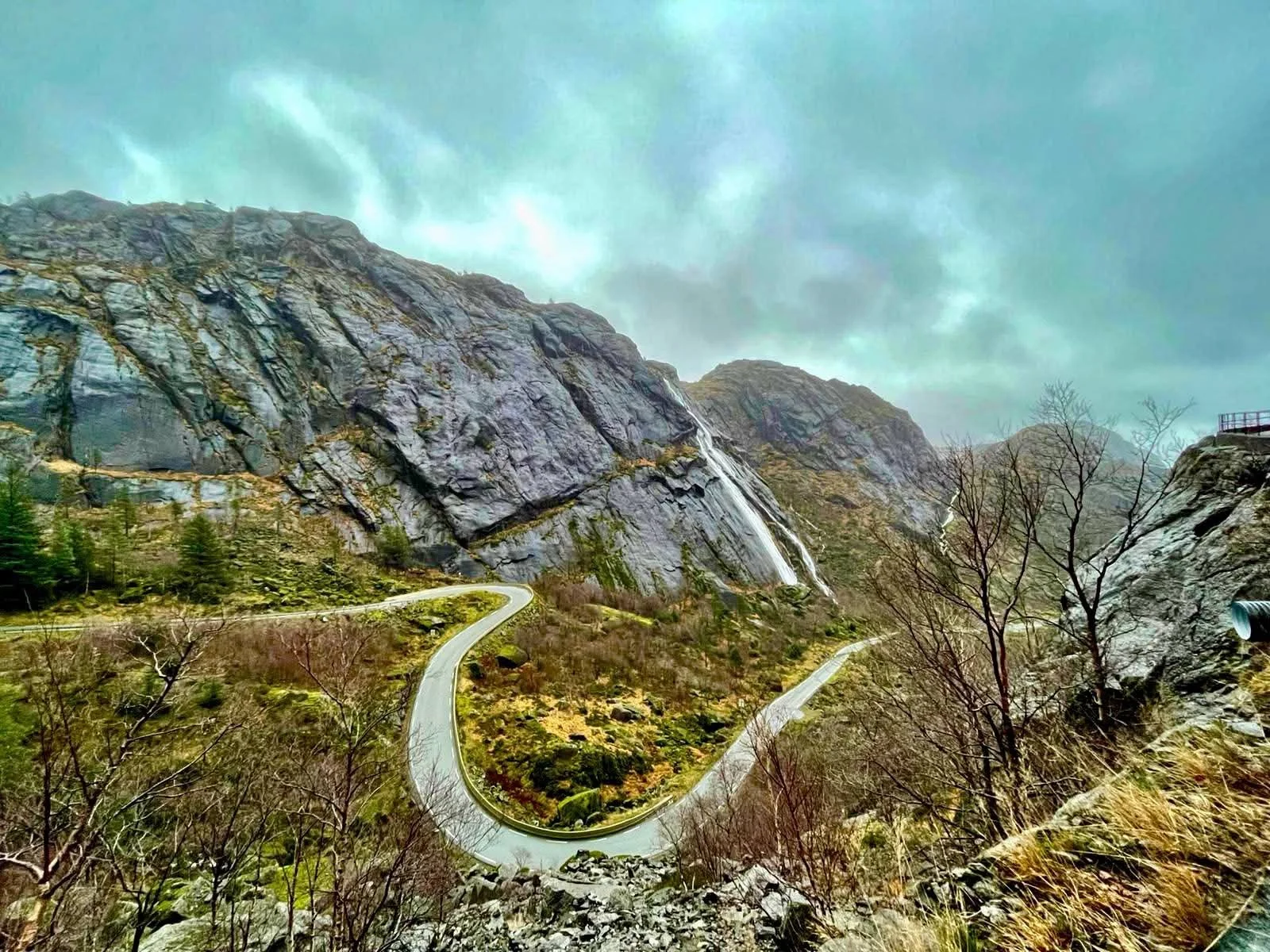
The winding mountain road of Jøssingfjorden — a rain-washed gorge leading toward Tunnelstuo, Flekkefjord’s abandoned 1921 tunnel.
In Jøssingfjorden, folded between steep mountain walls and the stillness of the gorge below, lies a 250-meter tunnel built in 1921 — Tunnelstuo.
A place where the road once breathed with passing cars, but now holds only the quiet hiss of the wind and the soft echo of footsteps on stone.
People come here for hammock camping, stringing their nights between rock and darkness.
But I came for something quieter — something inward —
and I wasn’t alone.
It was me, Bee, Lyra, and Hugo stepping into this old stone passageway, each of us carrying our own reason for saying yes to a November night like this.
I entered the tunnel with Lyra and Hugo padding at my sides, their paws tapping softly against the stone while Bee walked a few steps behind us, her headlamp casting long, moving shadows along the wall. The air inside shifted immediately — cooler, denser, touched with the mineral breath that only old mountains know how to exhale. Outside, November was pissing rain, the kind that tests your resolve. And maybe that was part of the appeal — I’ve wanted to try cave camping since 2024, but the idea of hauling a 75-liter backpack up a mountain for a real cave always felt beyond what my body could do. Tunnelstuo offered the perfect compromise: the atmosphere of a cave without the punishment of the climb.
Tunnelstuo, Jøssingfjorden — Norway’s Forgotten 1921 Road Tunnel
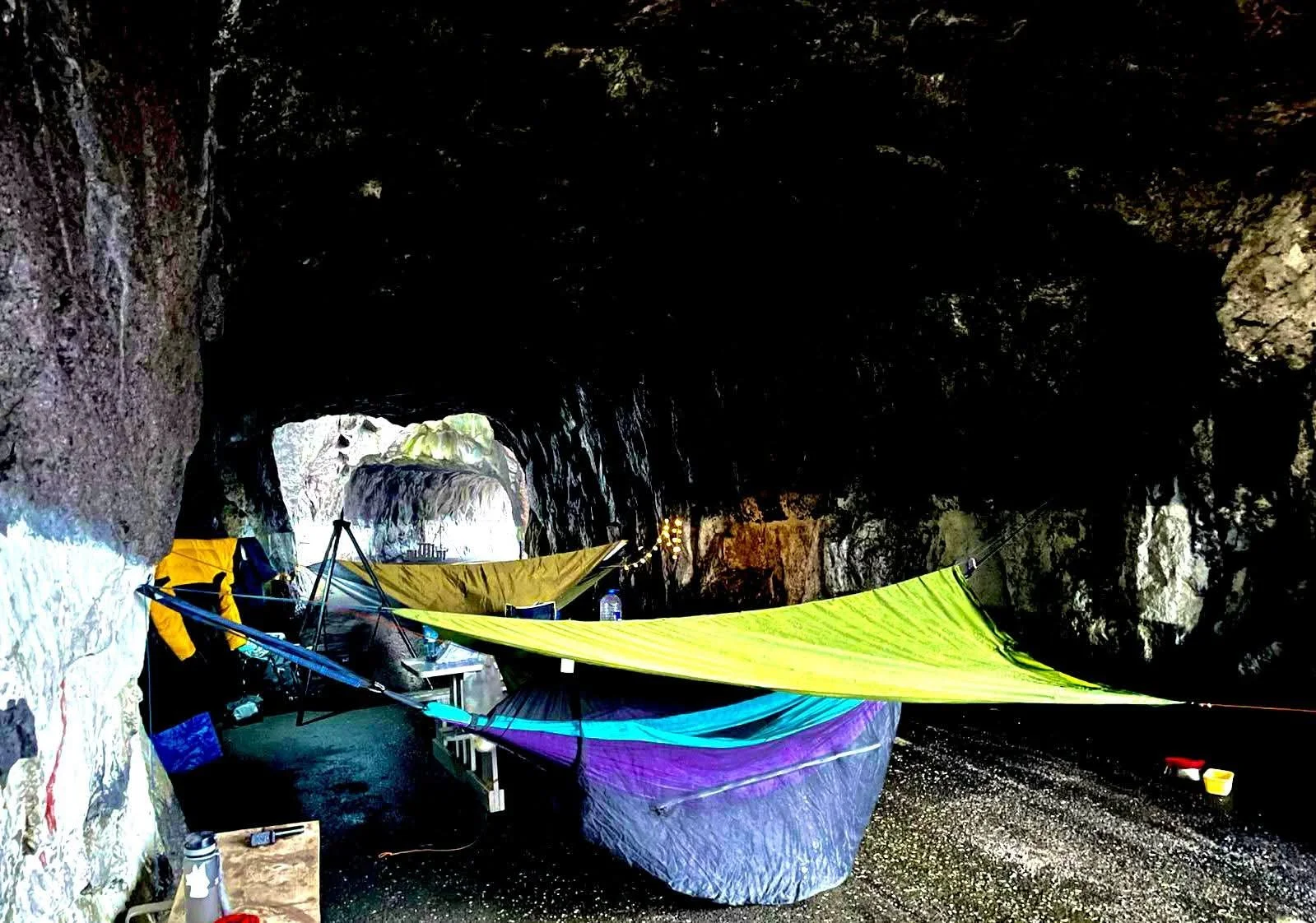
A colourful hammock-and-tarp campsite suspended inside Tunnelstuo — the abandoned 1921 road tunnel in Flekkefjord — where stone walls, shadows, and quiet shelter turn a simple overnight stay into a raw, cinematic wilderness moment.
Inside, the tunnel felt sheltered at first — a whole mountain acting as a roof.
But autumn tunnels have their own moods.
Some sections of the ceiling dripped steadily, the rocks bleeding thin, cold lines of water. Others stayed dry, pretending to be dependable. We set up the tarp anyway — a decision that shifted from “just precaution” to “thank God we did” as the rain pressed quietly but persistently against the cliffs. The longer the drizzle continued, the more the ceiling answered back, sending sudden drops straight toward my hammock. In a place like this, a tarp isn’t optional. It becomes part of the architecture of survival.
Entering Tunnelstuo in the November Rain
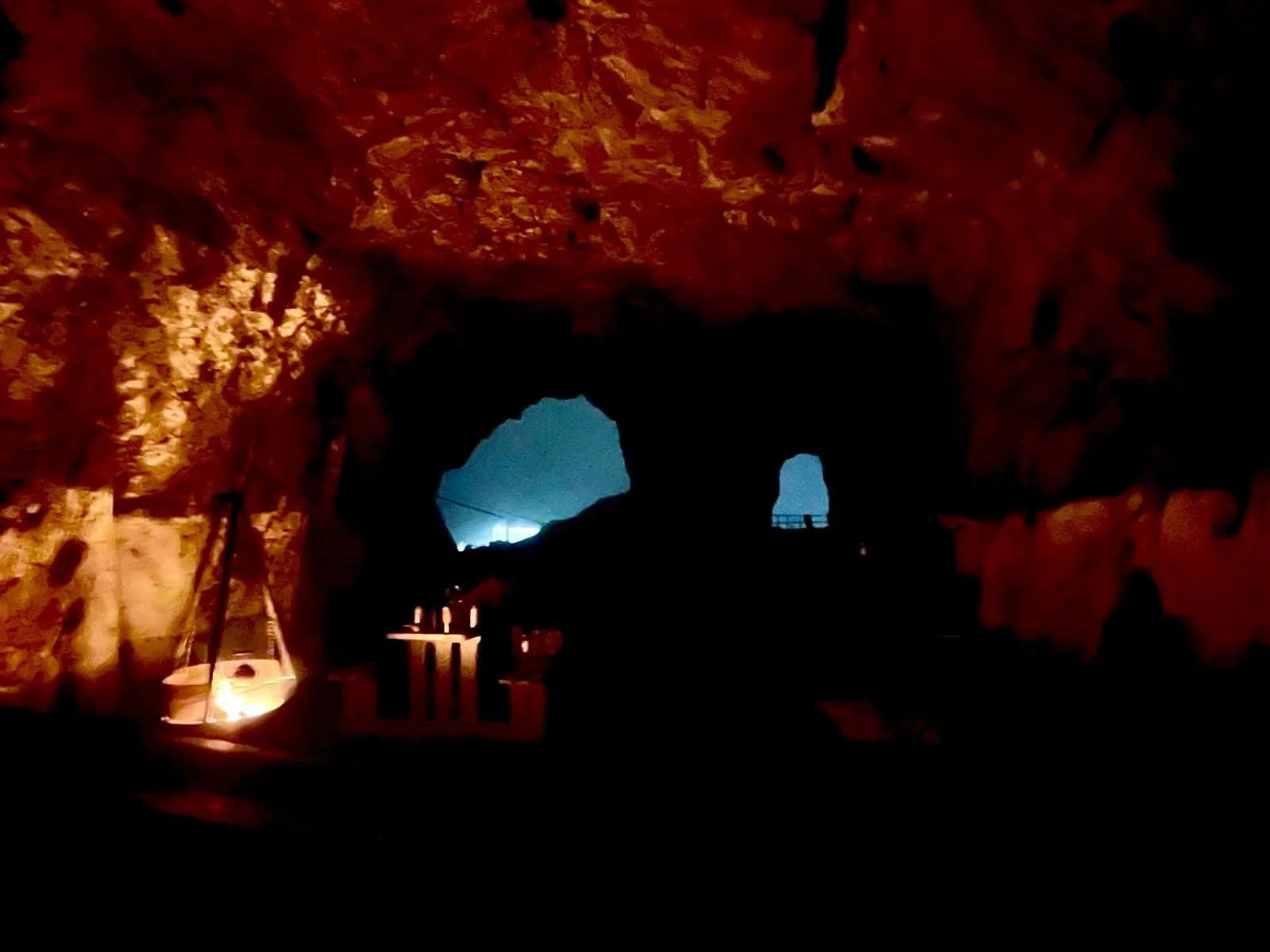
Firelight washes the red stone interior of Tunnelstuo at night, while the distant blue opening frames the valley beyond — capturing the haunting, beautiful stillness that makes this abandoned tunnel one of Norway’s most atmospheric wild-camping spots.
Tunnelstuo is unusual.
Both entrances face the current road, but inside the tunnel, carved into the stone, are openings that feel like natural balconies — window-like cutouts overlooking the mountains and the fjord.
They give the cave its softness, its perspective, its soul.
One of those openings became our living room.
Our breakfast table.
Our front-row seat to the valley.
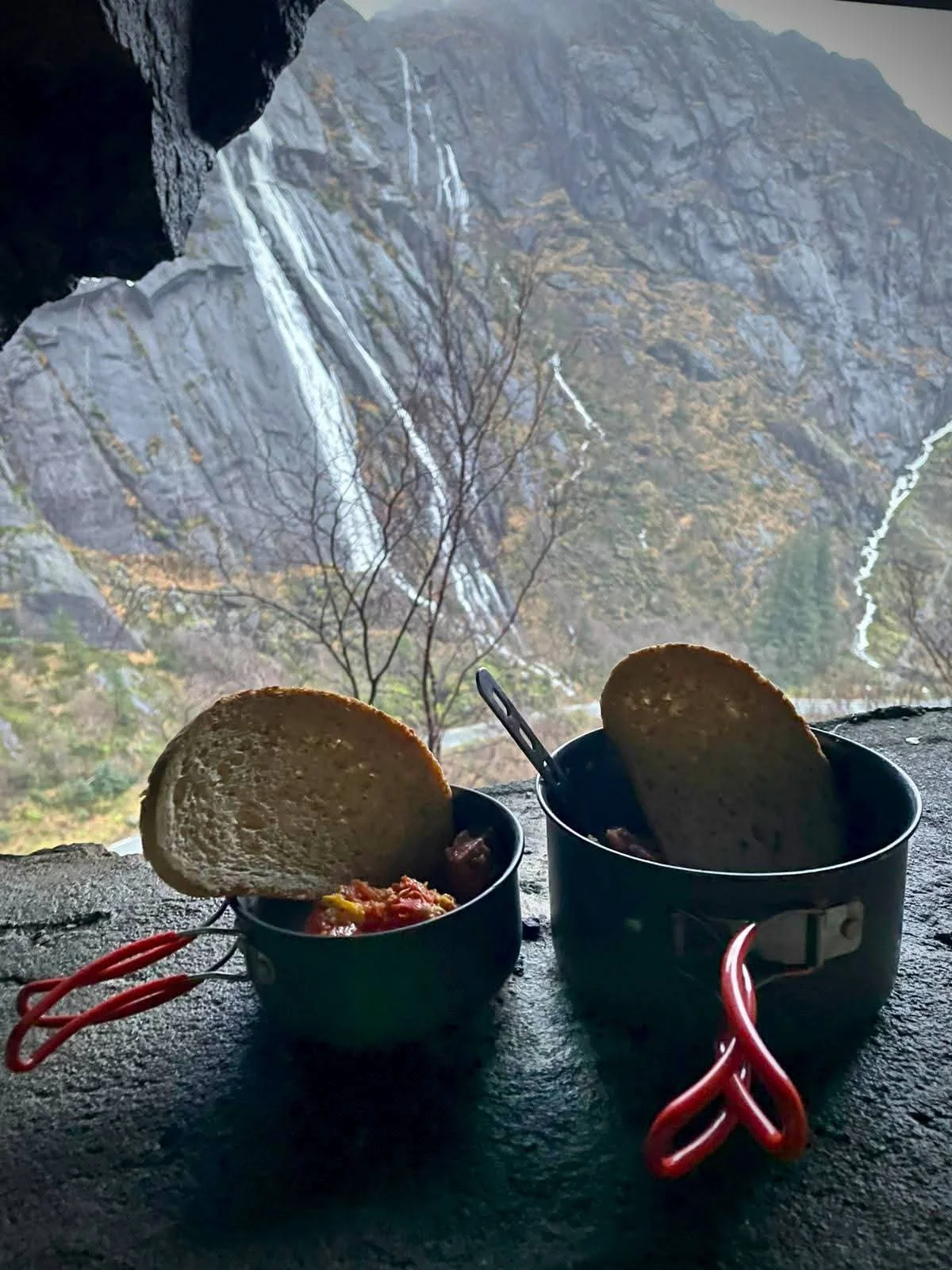
A simple camp breakfast sits on the stone ledge inside Tunnelstuo, framed by the towering cliffs and winter waterfalls of Flekkefjord. A quiet, rugged meal shared with the sound of water and the stillness of an abandoned tunnel turned sanctuary.
Finding Shelter for Wild Camping Inside Tunnelstuo, Flekkefjord
There is a silence inside a tunnel that feels different from the silence outside.
Outside, quiet is open — it escapes upward into sky, wind, and weather.
But inside stone, silence has weight.
It gathers.
It settles on you.
It turns your thoughts into something slower, older, steadier.
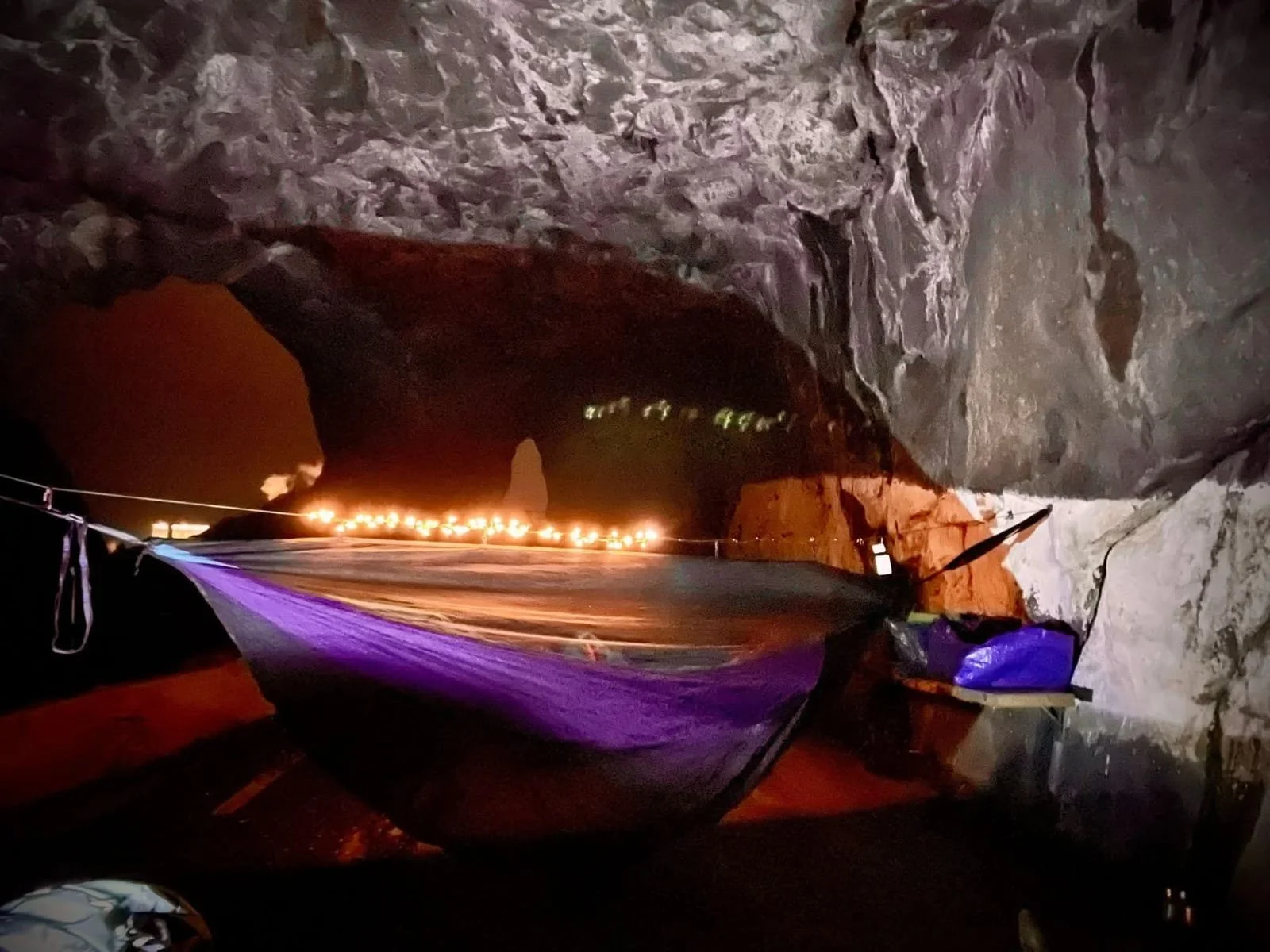
A suspended hammock glows under soft firelight inside Tunnelstuo, the abandoned Flekkefjord road tunnel. The stone walls catch the purple fabric and warm lantern glow, turning a forgotten passageway into a wild, intimate shelter for the night.
I set up my tarp near the wall, close to one of those balcony openings.
The dogs curled close at first, already convinced this was a safe place.
But as the evening deepened, the temperature dropped to seven degrees.
Hugo started to shiver — that unmistakable tremor dogs get when their fur loses the fight against the cold. Lyra pressed herself against him, worried and loyal, and that was my cue.
Adventure can be romantic, but responsibility is uncompromising.
So I led them to the Caddy, where I’d already prepared a warm bed layered with blankets.
The moment the door opened, they climbed in together without hesitation, curling into one shape — relieved, comfortable, safe.
Let them sleep warm, I thought.
Let them have their own shelter while I take mine.
Nightfall in Tunnelstuo — Firelight, Quiet Company, and a Norwegian November
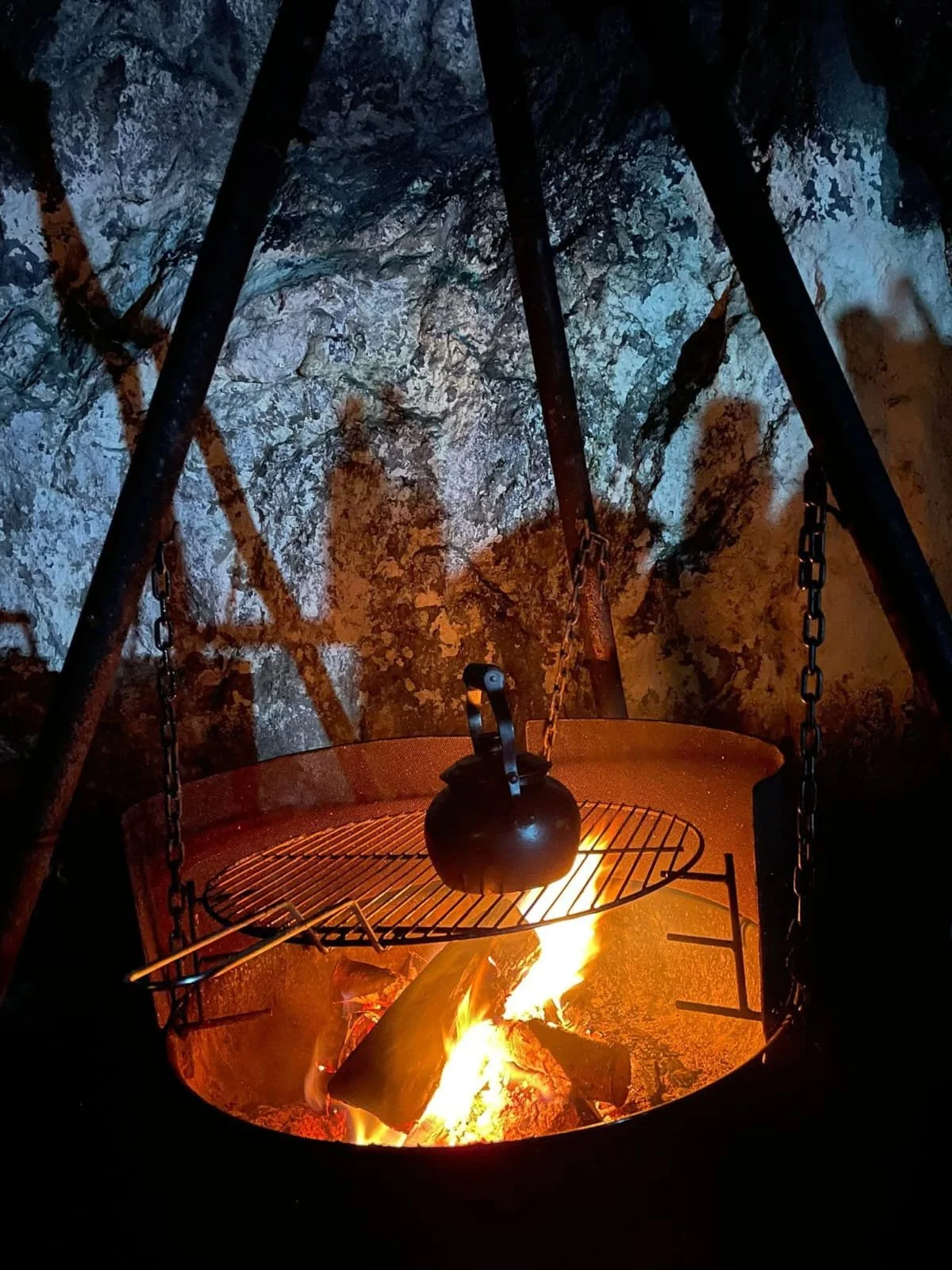
A black kettle hangs above an open fire deep inside Tunnelstuo, the abandoned tunnel in Flekkefjord. The flames cast orange light across the stone walls while cold blue tones linger above — capturing the raw, beautiful contrast of wild camping in Norway’s forgotten passages.
When I returned, Bee was settling into her hammock, her presence soft and steady — the kind of companionship that doesn’t intrude on silence but shapes it gently.
We lit a small bonfire near the opening, safe and controlled, the flames flickering against wet stone. The reflections made the tunnel feel ancient, ceremonial — a place that had seen too much weather and too many years to be intimidated by a November night.
The only entrance that mattered was the one facing the fjord, glowing faintly in the dark like a silver invitation.
Rain tapped gently at the rock outside.
The mountain held steady.
Bee breathed softly beside me.
And the dogs slept warm in the car, only steps away.
When a Quiet Place Becomes the Right Place
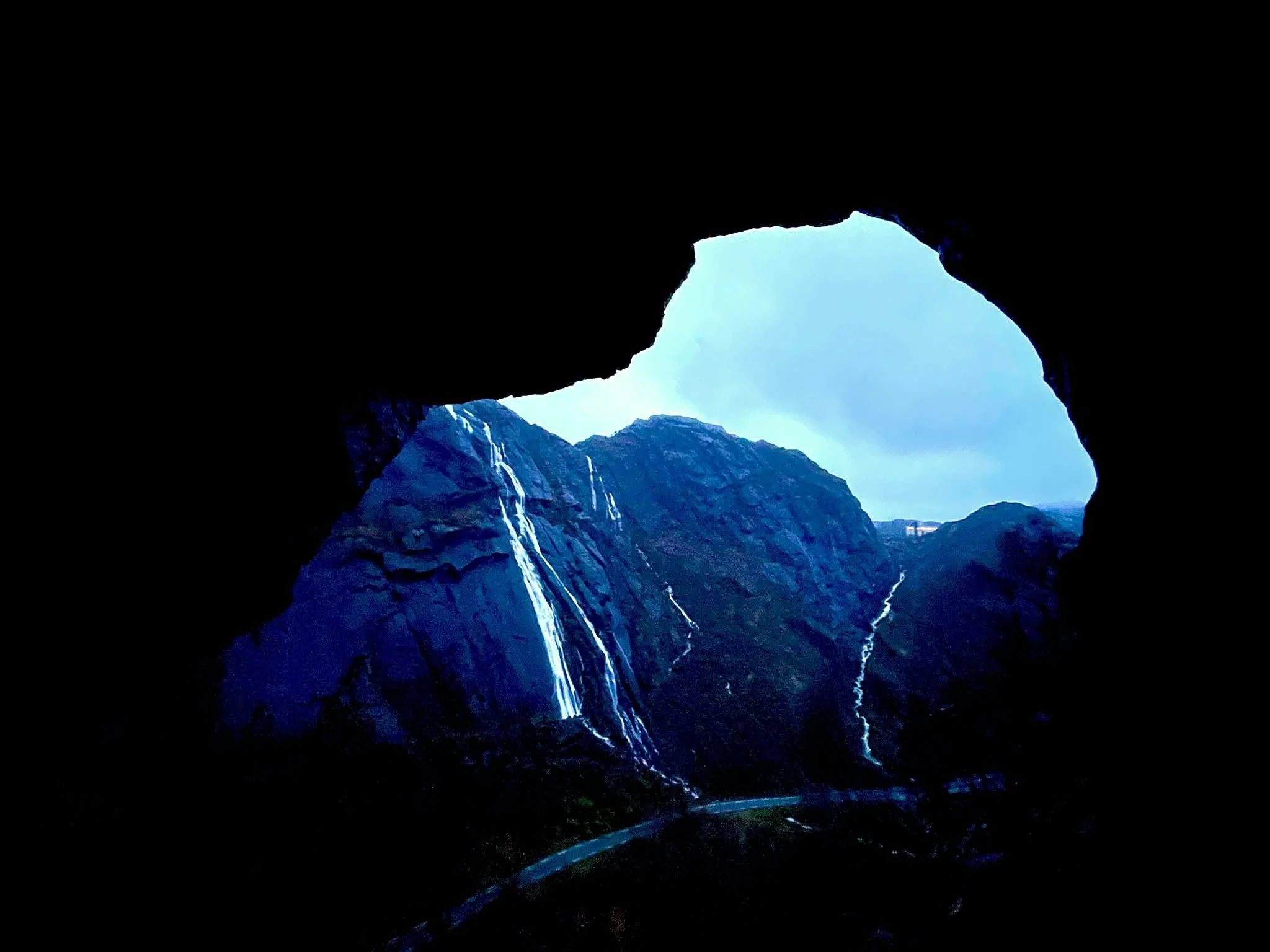
Framed by the dark mouth of Tunnelstuo, the morning light reveals steep cliffs carved by thin white waterfalls pouring down into the valley below. A raw, cinematic view that turns this abandoned Flekkefjord tunnel into one of Norway’s most striking wild-camping lookouts.
In the half-dark of Tunnelstuo, I realized something simple:
not every adventure needs wilderness miles or mountain peaks.
Sometimes the wildest thing you can do is give yourself one night of quiet —
a night where the world is reduced to stone, breath, firelight, and the soft assurance that everyone you care about is safe.
Tunnelstuo wasn’t the hardest place I’ve camped.
But it might be the place that met me the best.
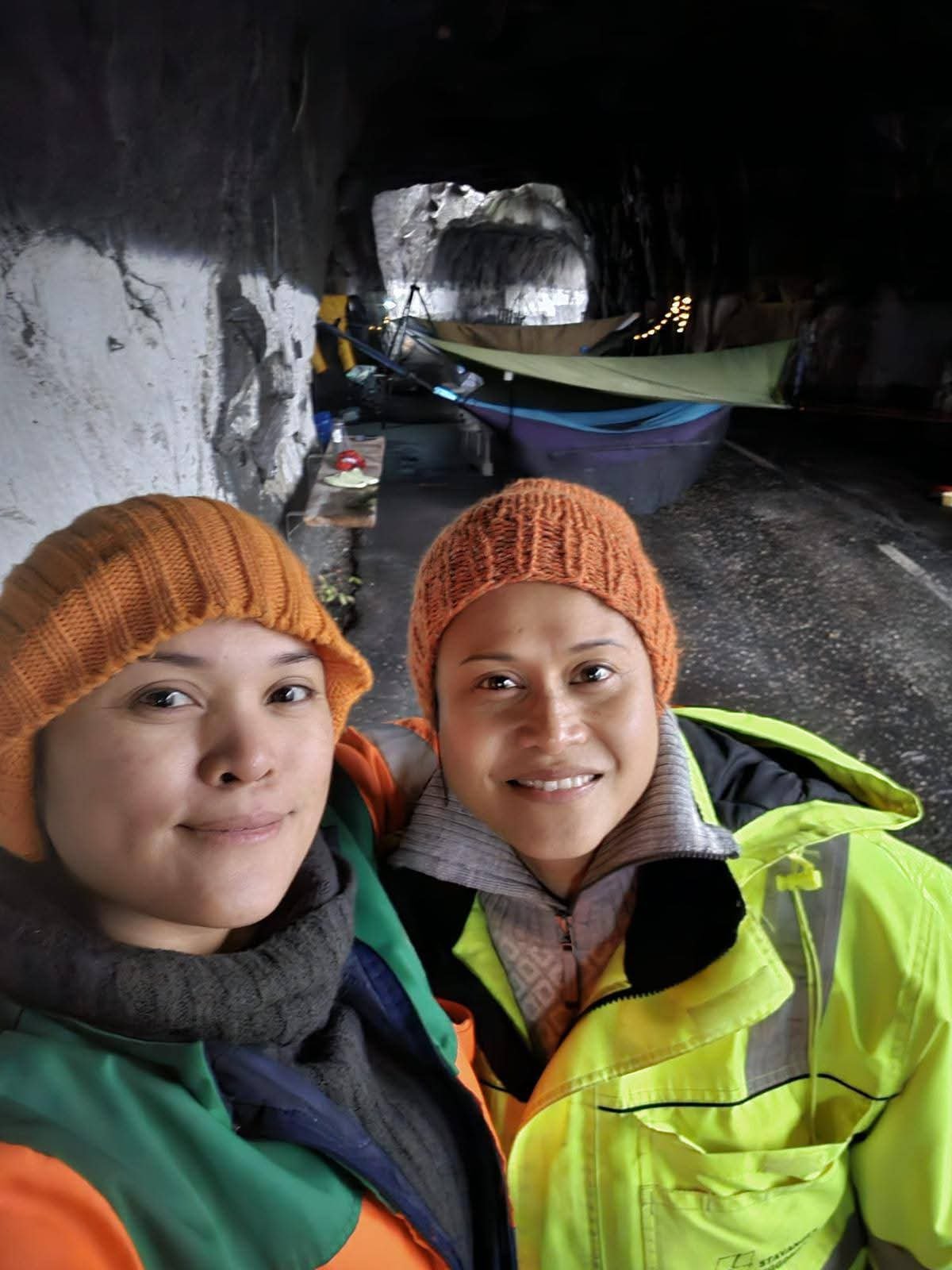
Bee and April share a quick selfie inside Tunnelstuo — bundled in bright jackets and matching knitted hats, smiling after a night of wild camping. Behind them, the hammock setup and soft tunnel lights show the cosy little world they built together in Flekkefjord’s abandoned road tunnel.
