Redlight District
Red Light Reflection: The Mirror We Didn’t Expect to Meet
When Amsterdam Turns Red
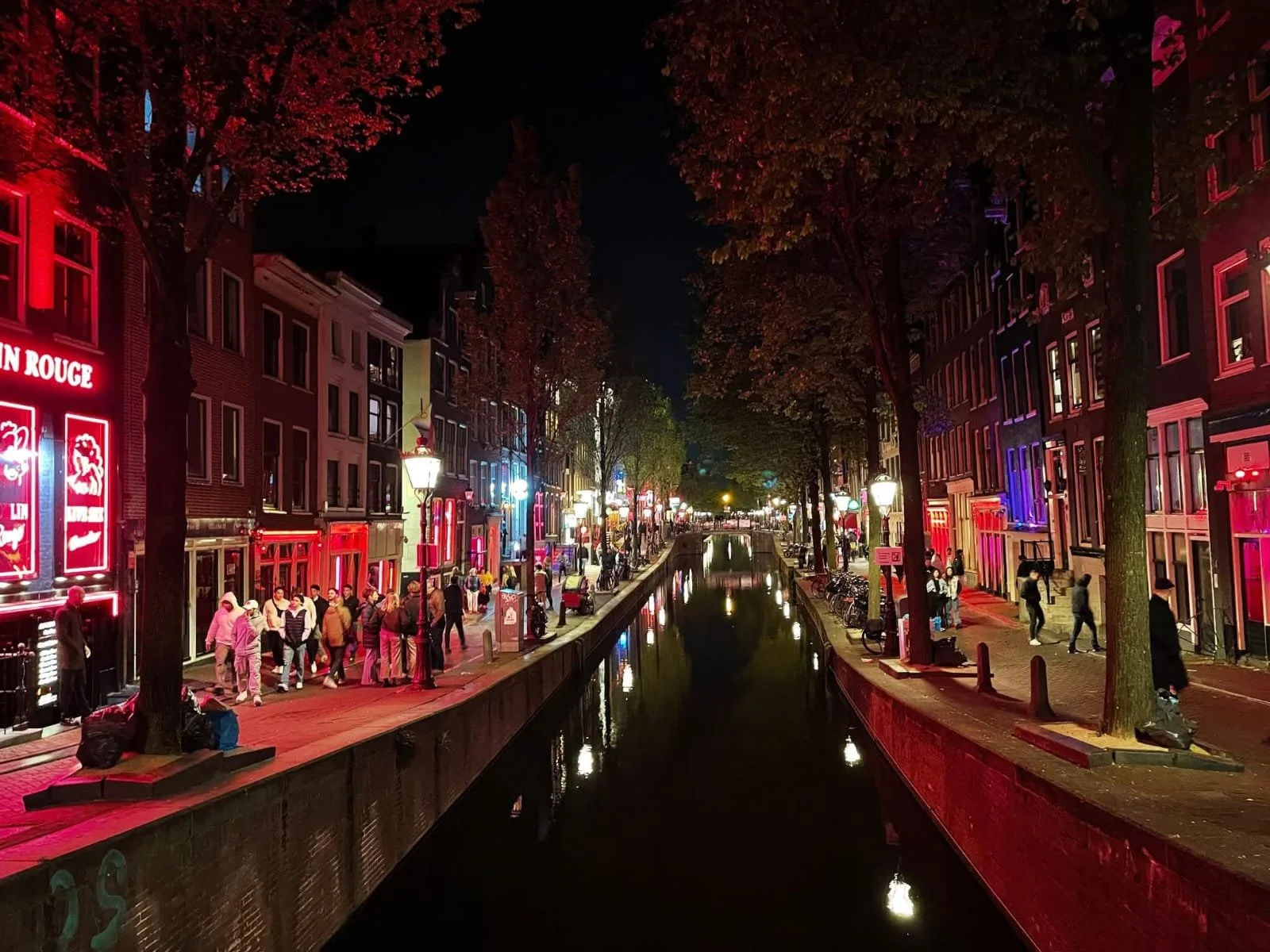
Amsterdam’s Red Light District reflected in the black canal, where neon desire drips into the water like a quiet sin.
What does it really mean to walk through Amsterdam's Red Light District—past cobblestone alleys slick with lust, money, and unspoken hunger?
The stories are always the same. People describe Amsterdam with tulips on their lips and canals in their eyes. But beneath the postcards and pancake houses, there is always a whisper. Quiet. Unrelenting.
"Check out the Red Light District."
Tourists begin with museums and boats, fries and laughter. The daylight is charming. Safe. Pretty in that delicate, curated way that convinces us the world is still innocent. But somewhere deeper—in the hollows of our bellies—we know better.
Wait until sunset, the city says. Then I show you who I really am.
The Women Behind the Glass
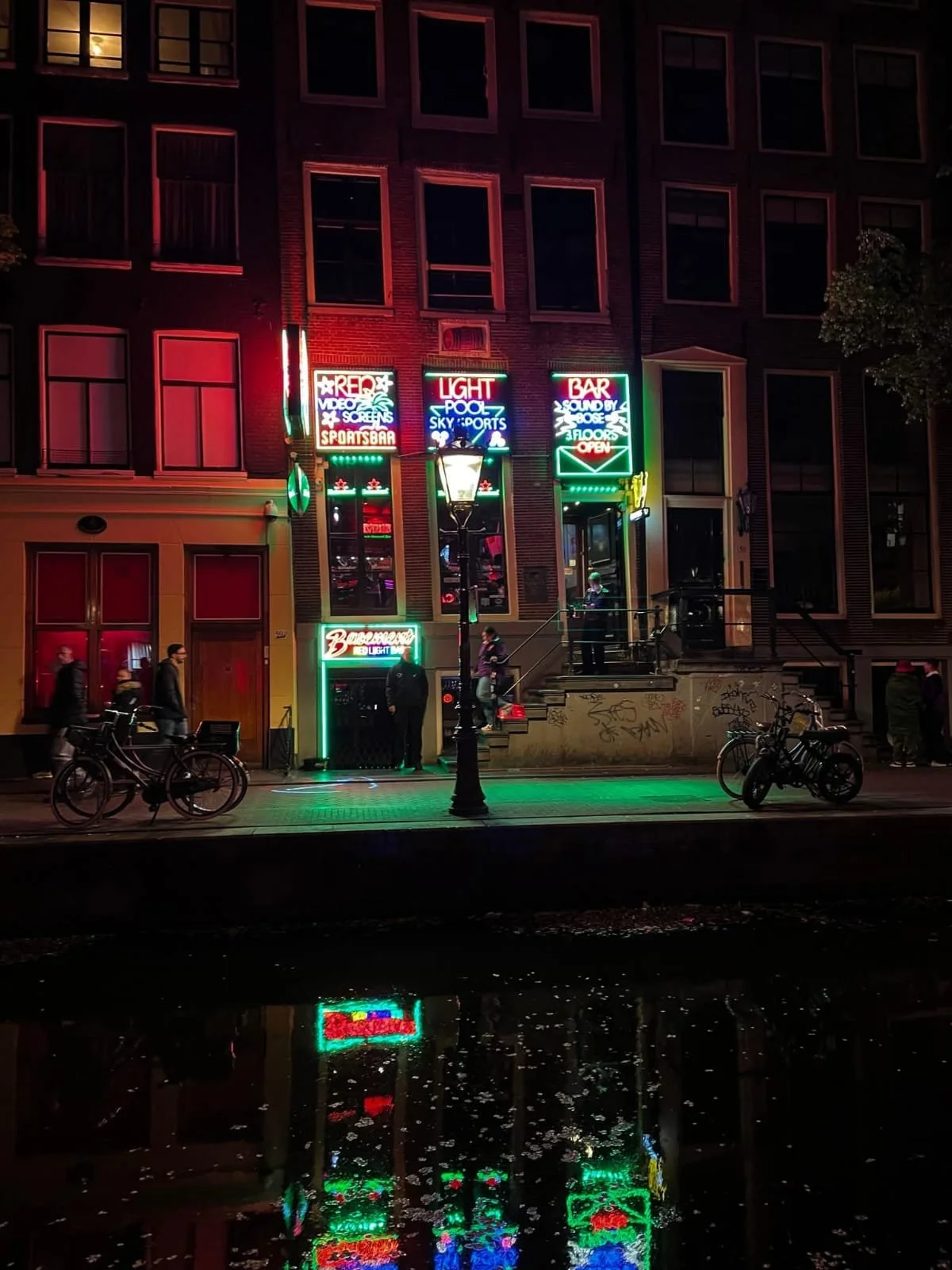
A quiet corner of Amsterdam’s Red Light District, lit by red and blue neon, holding the city’s secrets in its glow.
When evening falls, the transformation begins. The city doesn’t announce it—it breathes it. The air thickens. The streets blush. A strange electricity ripples beneath the surface.
So this is why they call it the Red Light District.
But it isn’t vulgar. It isn’t gaudy. It's ritual. It's rhythm. A seduction that doesn’t shout—it hums.
One by one, glass panes ignite. Women appear like living statues, altars framed in neon. They aren’t merely displaying bodies. They are conducting a performance older than economy.
And against expectation—we aren’t appalled. We are still. We are watchers. And we are watched.
The reaction isn’t moral outrage. It’s layered: sorrow, awe, fascination, and something unnameable.
Behind those curated gestures and perfected gazes are fragile souls. Some appear hyperaware. Others—hollow-eyed, perhaps numbed by chemicals or circumstance. All of them are exposed in a way that feels both sacred and sacrificial.
And the question forms:
What is the cost of being seen?
It's easy to say, "They chose this." That it’s laziness. Hedonism. But what if that isn’t the truth? What if this is one of the hardest performances? Emotional labor in red light. Neurological recalibration. Endurance dressed in lingerie. Maybe this is survival engineered as theatre—because theatre is the only thing the world pays for.
And what if the line between them and the rest of us is thinner than we think?
No glass may surround many of us. But the trade-offs are there. The performances. The costumed compliance. The exchanged intimacies. Safety bartered for silence. Bodies offered in return for comfort, status, or simply stability.
The difference isn’t morality. It’s location.
Some perform in bedrooms. Some in boardrooms. Some behind curtains of lace or obligation. And some, in panes of glass.
When the Red Light Follows You Home
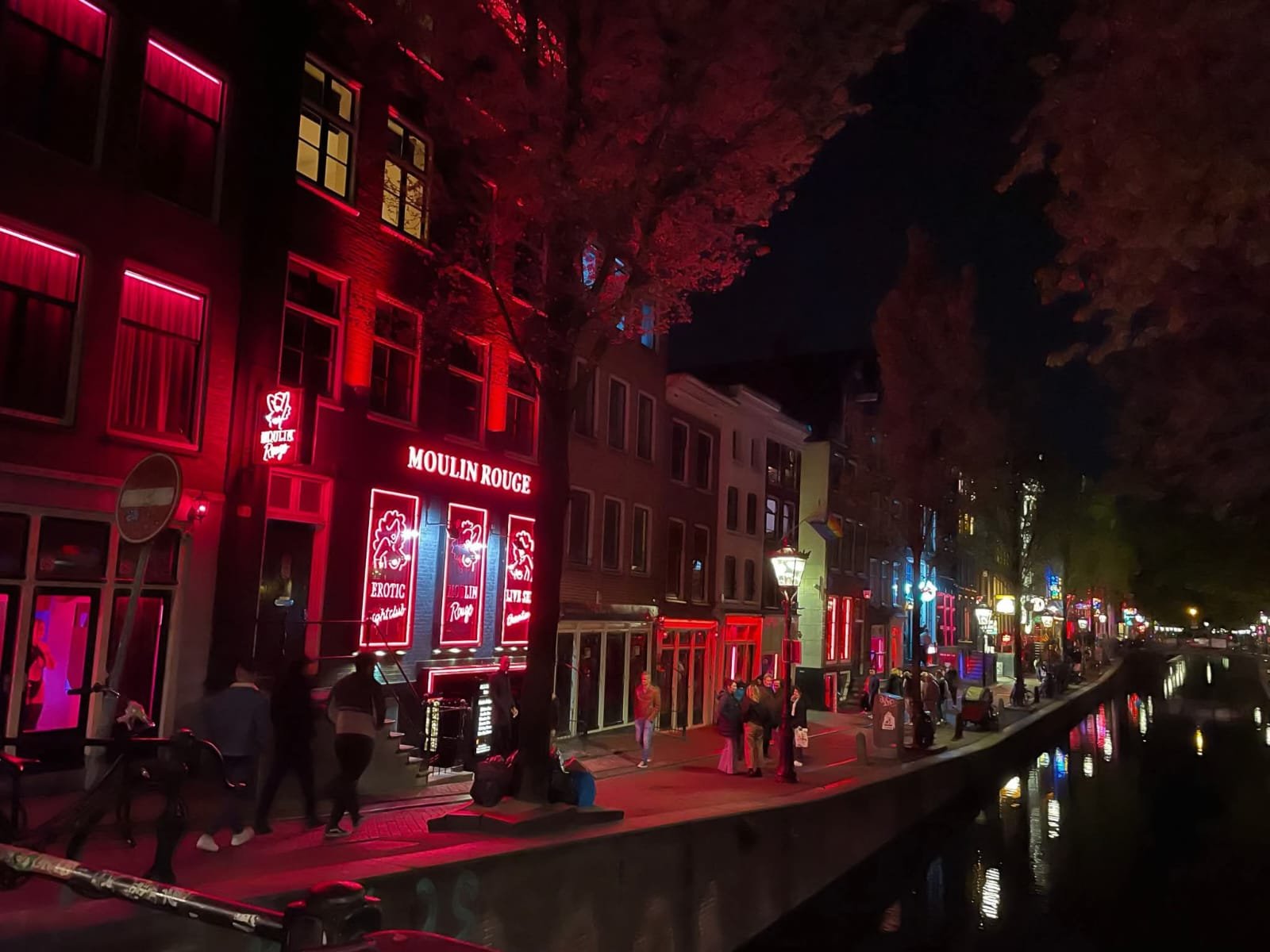
Neon lights burn across Amsterdam’s Red Light District, where curiosity and temptation walk the same cobblestones.
Witnessing this stirs something beyond moral reflection. It stirs power.
Because there’s a certain kind of audacity in standing there—in that spotlight—to be consumed, condemned, worshipped, and reduced. And still saying:
"Here I am. Look, if you must."
Is that numbness? Maybe.
But maybe it’s steel.
Or maybe it’s something for which language hasn’t yet been invented.
We all perform. We all wear veils.
Some of us just do it in softer light.
The walk ends without a transaction. No photo. No conversation. No fantasy bought.
But something follows us out of the red haze.
Not guilt.
Not pity.
Something stranger.
Maybe it’s the echo of perfume.
Maybe it’s the residue of desire left hanging in the air.
Maybe it’s the memory of standing so close to curated power—and the question it leaves behind:
what would it feel like to be wanted with such raw immediacy?
There are women framed by glass.
There are women framed by mascara.
And women framed by vows and wallets.
But the body remembers.
The hollow remembers.
And when the streetlights flicker just right, even virtue can feel like theatre.
