The Intrusion
-an autopsy of unnamed beauty
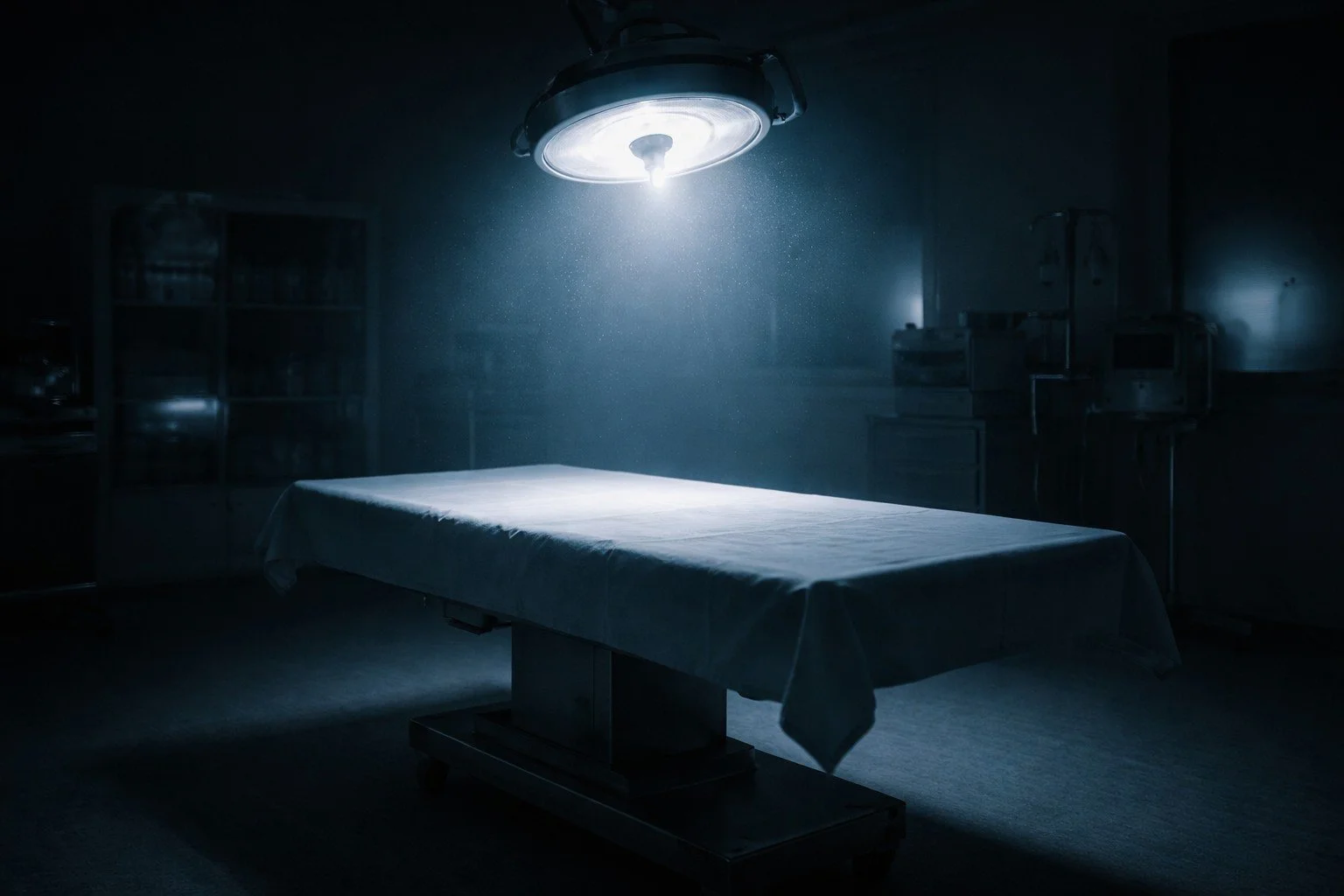
Under sterile glow,
the unnamed beauty lingers—
stillness learns to speak
THE UNNAMED BEAUTY
“Freedom is little. What I desire still has no name.”
The line stayed with me long after I closed the browser tab, long after I had forgotten which bookstore I was wandering through. Clarice Lispector wrote it in The Passion According to G.H. — a book I haven’t yet read, but somehow it read me first.
I’ve only touched a fraction of Clarice’s work, but this sentence felt like DNA recognition.
A strange inner click.
A sense of being mirrored by a woman I’ve never met.
If Clarice is not my mother, then she is at least the ghost-architect of my consciousness.
People assume I’m restless out of confusion.
No.
My restlessness is a compass.
When something captures my attention — a place, a person, a presence — I don’t wander.
I lock.
I follow.
I move toward it with a hunger I cannot yet name.
And this time, the pull was so strong it rearranged me — at the level of the nervous system.
Not my plans.
Not my weekends.
My nervous system.
Romance never does this to me.
Romance is too TikTok-ey, too glittered, too performative — a girl in a neon tulle dress stomping through the grayscale of ordinary desire.
Too loud.
Too easy.
Too rehearsed.
I prefer the uncharted — the road that isn’t paved, the connection that arrives without a label, the experience that feels dangerous because it is real. My system recognizes these things before my mind can behave properly. And this time, it dragged me somewhere new. Somewhere I can only call The Intrusion for now, because naming it feels premature, almost disrespectful.
What I can say is this:
It struck me with beauty.
And beauty — as Clarice reminds me — is my softest bruise.
“I am so vulnerable to beauty.”
But what is more beautiful than a connection?
What is inside it?
What makes it powerful enough that even skeptics call it magic?
Something sent a frequency so charged — a kind of somatic signal — it made my nervous system freeze, squeal, and spark. And I — curious, analytical, reverent — found myself preparing an autopsy. Not out of morbidity. Not out of fear.
But because anything that can dismantle me this beautifully deserves to be understood —
piece by piece, layer by layer —
as if I were shaking its hand and saying:
I’m a fan of what you’ve done to me.
THE FREQUENCY WITHOUT A NAME

Brightness leans closer—
the unnamed stirs in my palm,
meaning aches to form
This particular frequency — this subconscious recognition my system caught before my mind could categorize it — was not simple.
Not light.
Not casual.
Not easy.
Whatever it was, it registered across multiple layers at once:
• somatic
• psychological
• emotional
• tender
• exquisite
• painful
• precise
• awakening
It didn’t behave like anything “flingy” or fruity, nothing like the heart-shaped blush of perfume-soaked romance. It wasn’t erratic like a crush, nor anxious like a fantasy spiraling out of control.
It felt cleaner than that.
It warmed the core the way amber does — a low, steady burn.
A quiet flicker of heat that behaves more like information than emotion — a kind of somatic intelligence.
A controlled current running through my veins, not rushing, not demanding — just buzzing with unnerving composure.
It did not rush through me.
It installed itself — quietly, efficiently — as if it had every right to be there.
And then I caught myself wondering:
can one mind hijack another without either one noticing it’s happening?
Wouldn’t it be wild — to feel cognition bend, not by force, but by proximity?
If I were to classify it, I’d hesitate.
Recognition isn’t quite the word.
Connection is too vague.
Attraction is far too weak.
I had called it a connection earlier — a temporary shelter for something I didn’t yet understand. But the word dissolves the moment I touch it.
So tell me —
should we call it a frequency match?
Because that’s the closest I’ve come to naming it, and even then, I’m not entirely convinced.
Whatever it was, I felt it before I understood it,
and I understood it long before I was willing to accept it.
THE NERVOUS- SYSTEM SHIFT
The Reflex Older Than Thoughts
I’ve never been the type to drown myself in mysticism.
If anything, I tilt toward science — toward explaining my reactions through cognitive and somatic processes.
So when I sense something before my brain receives the memo to interpret it, I become
uneasy.
Tense.
Alert.
Suspicious of my own biology.
I don’t accept anything I cannot understand.
And I refuse the usual consolations:
“Don’t question it,”
“It’s God’s will,”
“The universe is giving you a sign,”
“Just go with the flow, that’s being human.”
Those phrases starve me.
How could an entire planet be so satisfied with answers that shallow?
I won’t blame the world for my own hunger — that would be a lazy investigation.
So instead, I keep my scalpel sharp as I slice through the inquiries of my mind.
Because something in my core moves:
older than thought,
older than language,
older than the self I present to the world.
A mechanism that seems to operate faster than consciousness — a quiet, precise occurrence in my nervous system that registers an event:
before emotion,
before narrative,
before desire.
It feels like a pre-conscious neurological reflex.
But not the reflex of muscle or survival — something deeper.
Something origin-like.
So what do you call a reflex that neither the brain nor the body can fully articulate?
Where does it come from?
What is its source?
Could that be the essence — the thing buried beneath thought — that turns the entire world upside down the moment it encounters The Intrusion?
The shift in Baseline State
My baseline is naturally kinetic and lively — not still, not quiet.
Not chaotic, but restless in the way a grasshopper is restless:
bouncy, alert, always mid-leap.
But when The Intrusion entered me — or I entered it — my system rearranged itself.
My breathing slowed.
My focus sharpened.
Something warm threaded along my spine, neither pleasant nor threatening.
Just… present.
It felt like an update installing in the background,
a shift in atmospheric pressure inside the body,
as if the architecture of my awareness had been tilted a few degrees to the left.
Not enough to alarm.
But enough to notice.
The Internal Surveillance System Turns On
A quiet alertness rose in me — not dramatic, not loud, just a subtle lifting of the internal sensors.
My attention recalibrated.
My perception narrowed.
Something in me sat up straighter, curious, cautious, awake.
This wasn’t emotional vigilance.
It was observational — the kind of hyper-awareness that sparks when the psyche detects a pattern it cannot yet categorize.
A silent committee convened behind the eyes.
No one spoke.
But everyone listened.
The Disruption of Normal Patterns
Ordinarily, I move through moments with controlled neutrality.
I don’t enjoy being moved, or startled, or affected.
But beauty is the exception —
my nervous system bends for beauty,
tries to grasp it,
revere it,
measure its temperature.
Can I take it?
Would it want to be mine?
My thoughts slowed instead of speeding up.
Sensation intensified instead of blurring.
My mind — usually so composed — began stitching together details with unnecessary precision, as if the system had decided this moment was data worth archiving.
A soft hum settled beneath my skin — persistent, steady, uninvited.
Not panic.
Not desire.
Not fantasy.
Just disruption.
The kind that suggests a new variable has quietly entered the equation.
The Core Puzzle: Why Did My Nervous System React?
The question rose with unnerving simplicity:
Why did my nervous system react as if it recognized The Intrusion — a pattern it had no logical reason to know?
Recognition implies history.
And yet — something in me responded before I consented to respond.
A reflex older than thought.
Where does that come from?
Over the years, through challenges and survival, my pattern-recognition skill sharpened — not consciously, but through adaptability.
The body loves a challenge.
The soul loves victory.
Maybe that’s how I got good at this.
Which reminds me of my grandmother.
For someone who rejects mysticism, here I am telling the story of a woman the entire village swore possessed magic.
Magic what?
People would come to her when they lost things,
or when something had been stolen.
And somehow — impossibly, consistently — she would find the missing item or identify the thief.
She called it an “ally.”
The villagers called it “magic.”
But I suspect it was neither.
What she had was a pattern-recognition apparatus so sharp, so instinctive, that people mistook it for the supernatural because they lacked the language to articulate intelligence.
So what if this reaction in me is the same mechanism?
An inherited vigilance trying to identify a pattern too subtle for conscious categorization?
And when I was with The Intrusion,
it felt like an old frequency replaying in a room I had never entered before.
So is this déjà vu?
Would that explanation soothe the hunger?
Or is it simply a pattern too precise to dismiss,
too subtle to accept,
too strange to ignore?
Whatever it was, something in me moved long before I agreed to move.
And that is always a puzzle worth solving.
The Autopsy Becomes Necessary
You don’t ignore a tremor in a building you trust.
You don’t overlook a new hum in a machine that has never made a sound like that before.
A change this controlled, this precise, this quiet demands dissection.
Not because I’m afraid of what I felt.
And not because of The Intrusion.
But because the integrity of my internal world requires understanding the exact mechanism of its disturbance.
A system like mine doesn’t react without a reason.
And a reaction like that doesn’t arrive without a source.
The autopsy wasn’t optional.
It was inevitable.
AFTER THE AUTOPSY
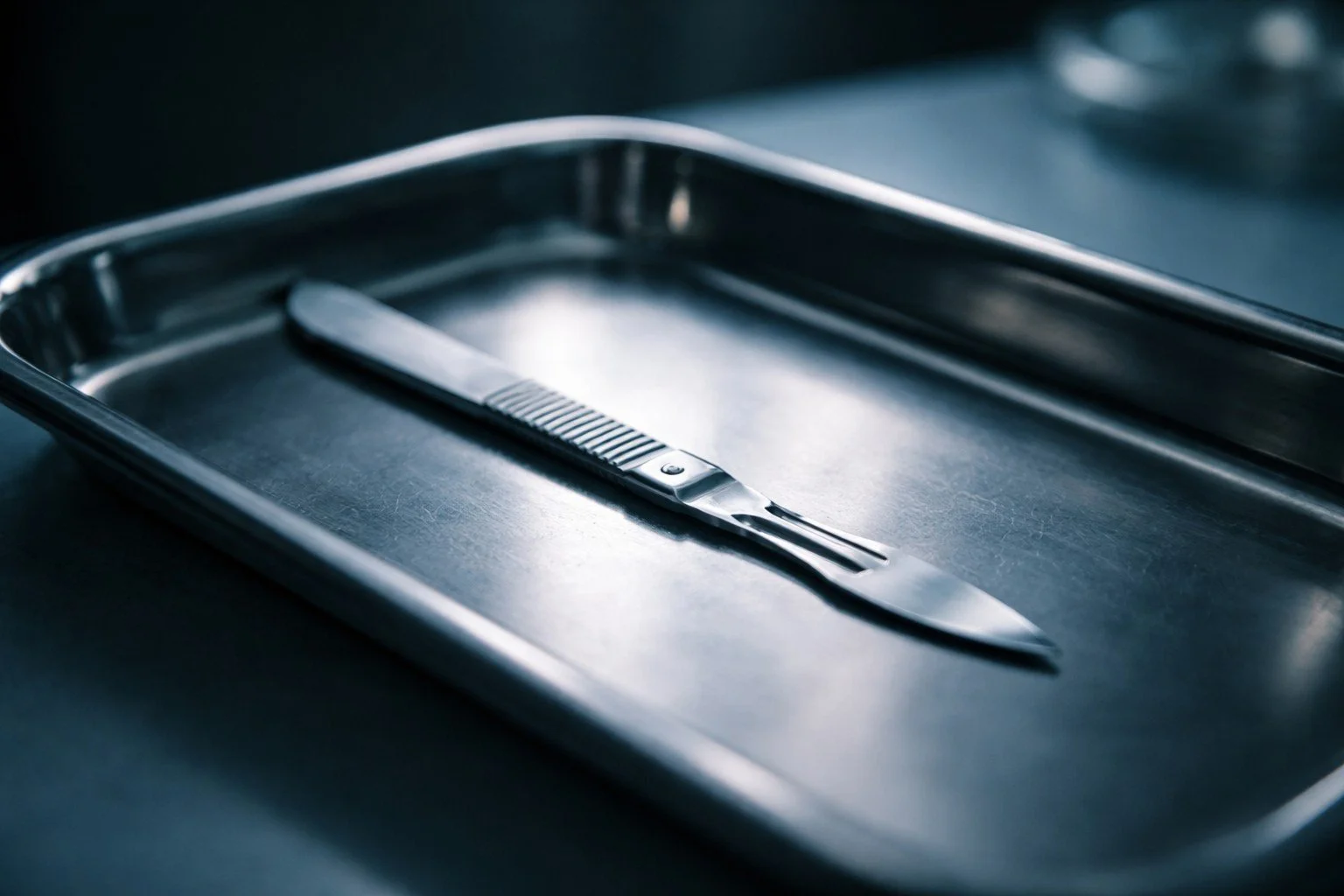
Cold steel waits in hush—
the autopsy of beauty
begins without blood.
The Intrusion.
The phrase has shaped itself around my experience, but even now, it feels temporary — a glass jar around something still shifting.
As I step away from my desk to pour myself a cup of coffee, the few steps to the kitchen confront me with a quiet, startling truth:
the dissection was never about The Intrusion at all — it was about the internal architecture of my nervous system responding to it.
Somewhere between the kettle and the countertop, I finally admitted what my system had been whispering all along:
The Intrusion was beautiful.
Not perfect.
Not flawless.
Just being —
and somehow that was enough to rearrange me.
Beauty like that doesn’t aim to impress.
It simply exists, and existence alone becomes a force.
A pressure.
A disturbance.
A quiet reordering of whatever it touches.
I return to my desk and realize the autopsy has reached its natural end for now.
Not because the mystery is solved,
but because my intelligence — sharp as it tries to be — has limits.
There are parts of me older than language, older than thought,
and they have been moved by something I still struggle to name.
So I do the only honest thing left:
I remove my gloves.
The operating table remains beneath the lamp, the surface still carrying the outline of everything I tried to dissect.
The specimen — the unnamed beauty, the frequency, the reflex — isn’t dead, wasn’t even something that could die.
It hums faintly, the way certain truths continue breathing long after you stop touching them.
I set the scalpel down beside the tray.
Let it cool.
Let the silence settle around it.
Some investigations aren’t solved;
they’re lived.
