Nimsdai
The Mountain Didn’t Need Him. We Did.
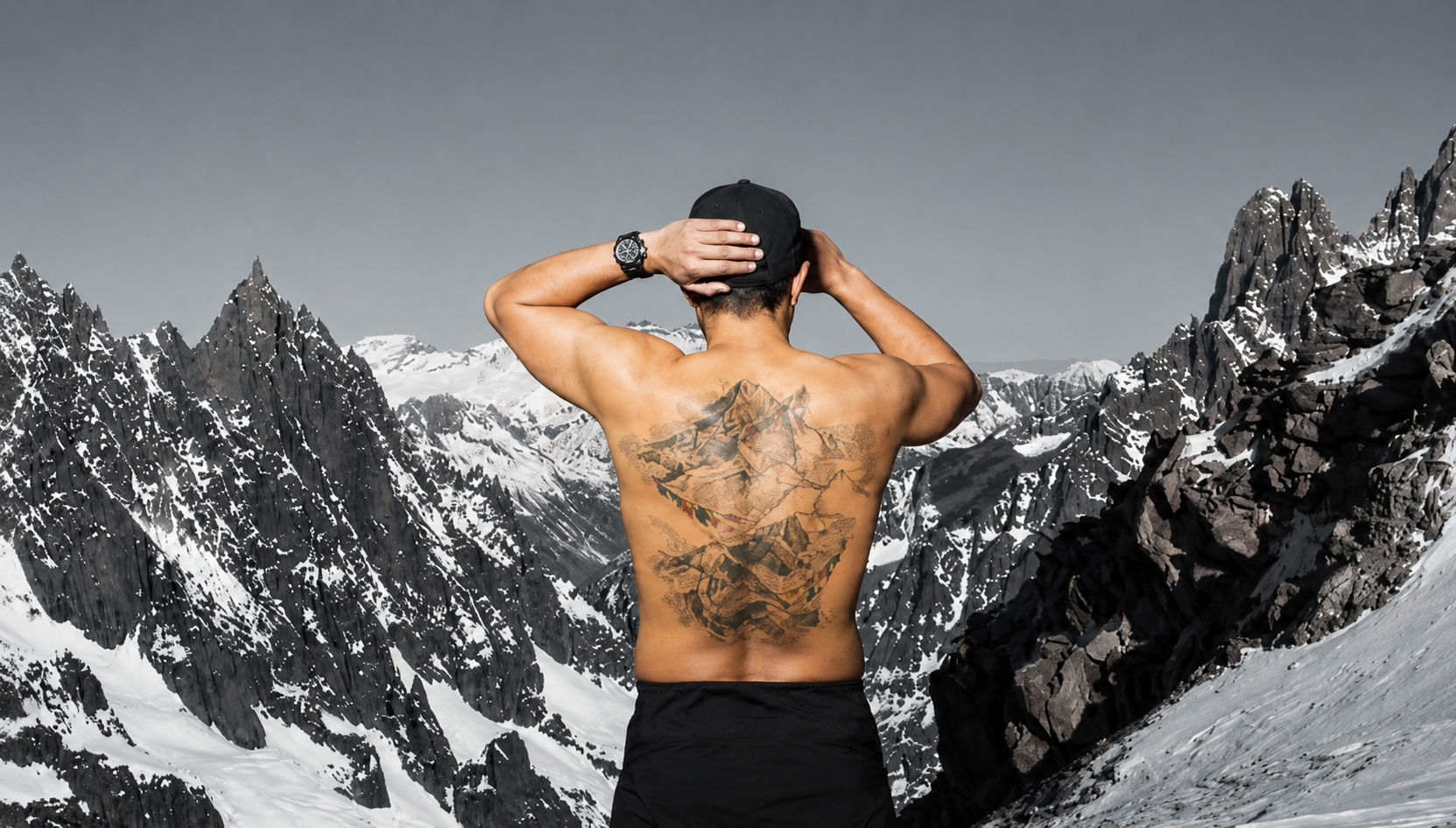
For some, mountains become memories. For others, they become part of who they are. Nirmal "Nimsdai" Purja literally carried them on his back.
Somehow, my version of a talisman isn’t a lucky coin, a crucifix, or a precious gemstone.
Mine is a Gurkha from Nepal.
I never shook his hand.
We never exchanged a polite “Hello, how do you do?”
I never joined one of his expeditions. Heck, I’ve never even been to Nepal. I’ve never walked through the villages beneath the Himalayas, never breathed the thin air of Everest Base Camp, and certainly never stood on an 8,000-metre peak wondering whether I would make it home alive.
In fact, if you had asked me to point out Broad Peak on a map before 2022, I probably would have embarrassed myself.
His name was Nirmal “Nimsdai” Purja.
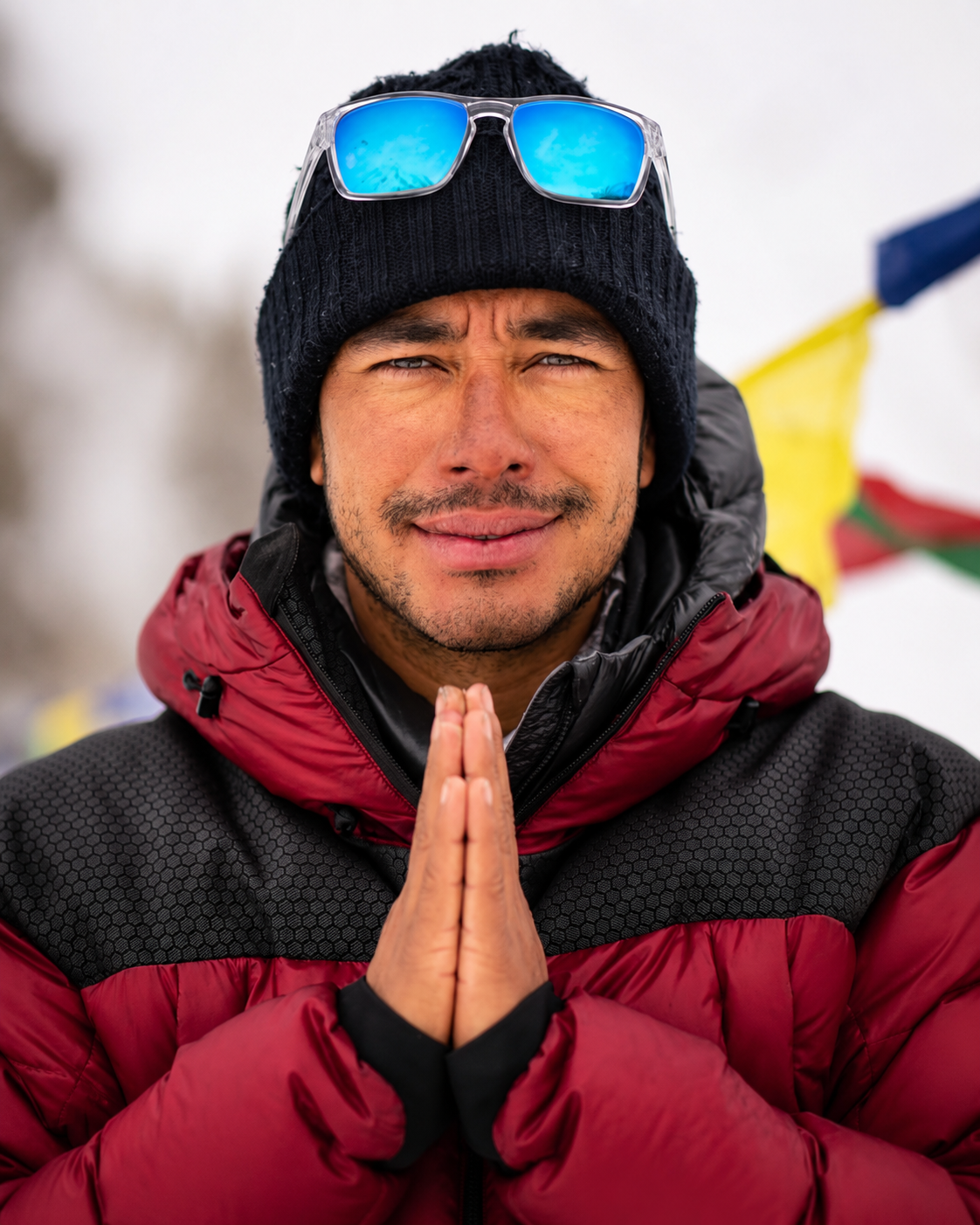
Humility was never separate from his strength. Before the mountains, respect always came first.
The first time I heard it while watching 14 Peaks: Nothing Is Impossible, it lodged itself somewhere in the back of my mind like an uninvited guest who simply refused to leave—completely rent-free.
Strangely enough, I never wanted him to.
I thought I was merely putting on another Netflix documentary. I had no idea that somewhere between the closing credits and my own muddy hiking boots, Nimsdai would stop being a mountaineer I admired.
He became the person I borrowed courage from.
He became my talisman.
Whenever I’m halfway up a mountain with a spectacular hangover after spending the previous evening outside my tent, polishing off an entire bottle of wine while convincing myself that the moon shimmering across the lake was a perfectly legitimate reason to drink the whole thing, my enthusiasm for hiking mysteriously evaporates.
My lungs protest.
My calves unionise.
My brain suddenly discovers the incredible beauty of turning around.
Then Nimsdai shows up.
Not physically, obviously.
Just that unmistakable voice I’ve carried around for years, now conveniently modified for its audience:
“Giving up is not in the blood, ma’am.”
And somehow, I keep walking.
The Man Behind the Summits
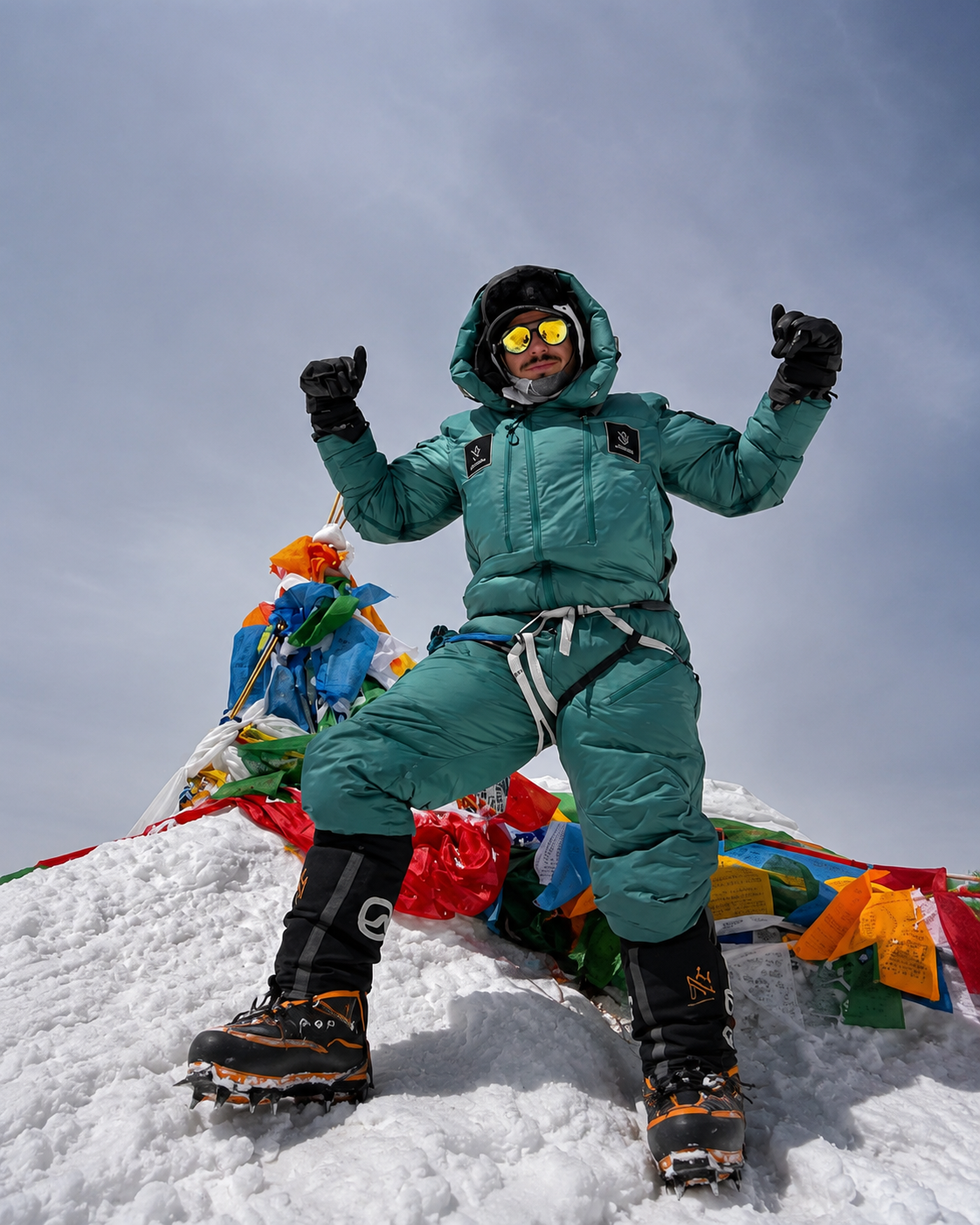
Behind every summit photo lies years of preparation, sacrifice, and countless decisions made long before reaching the top.
One of the questions I have found myself asking over and over again these past few days is a surprisingly simple one:
Why Nimsdai?
After all, the world has no shortage of remarkable people.
There are extraordinary athletes, brilliant scientists, fearless explorers, gifted artists, decorated soldiers, and countless individuals who have pushed the limits of what human beings thought possible.
Why did this particular man quietly become my talisman?
At first, I assumed the answer was obvious.
It had to be the mountains.
Surely anyone who climbed all fourteen of the world’s 8,000-metre peaks in 189 days would leave an impression on those fortunate enough to witness it.
But the more I thought about it, the more I realised I had been giving the wrong answer.
The mountains caught my attention.
The man kept it.
Nimsdai never apologised for believing in himself.
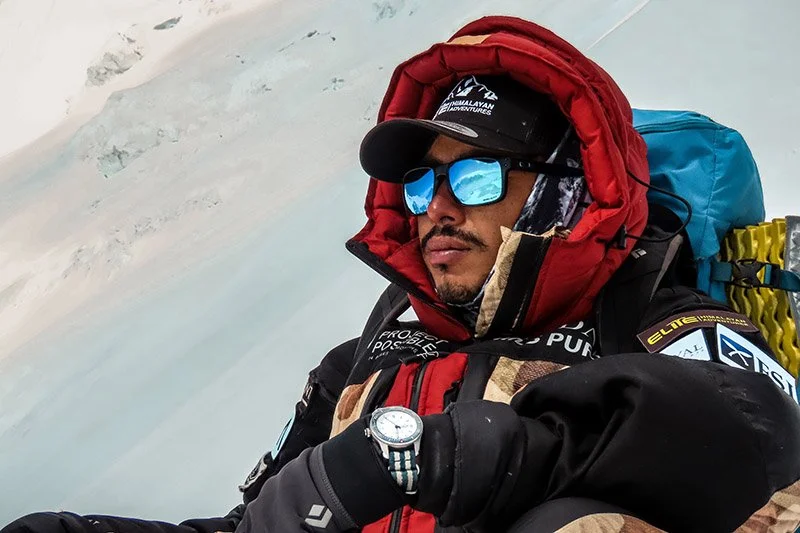
The mountain rewards patience as much as endurance. Sometimes the strongest move is knowing when to pause before taking the next step upward.
He didn’t wrap his confidence in false modesty simply to make it more socially acceptable. He knew exactly what he was capable of, and he spoke about it with the same certainty with which he climbed mountains: boldly, unapologetically, and with very little interest in whether other people found him too much.
He knew he was good.
Exceptionally good.
Pretending otherwise would not have been humility. It would have been dishonesty.
Some people found that confidence refreshing.
Others found it unbearable.
I simply found it… honest.
The impossible has rarely been accomplished by people who quietly waited for permission.
What fascinated me, however, was that his confidence never seemed to exist solely for its own sake. It always appeared to serve something larger than his reputation.
It served a mission.
It served a team.
It served an idea.
The People Behind the Summit
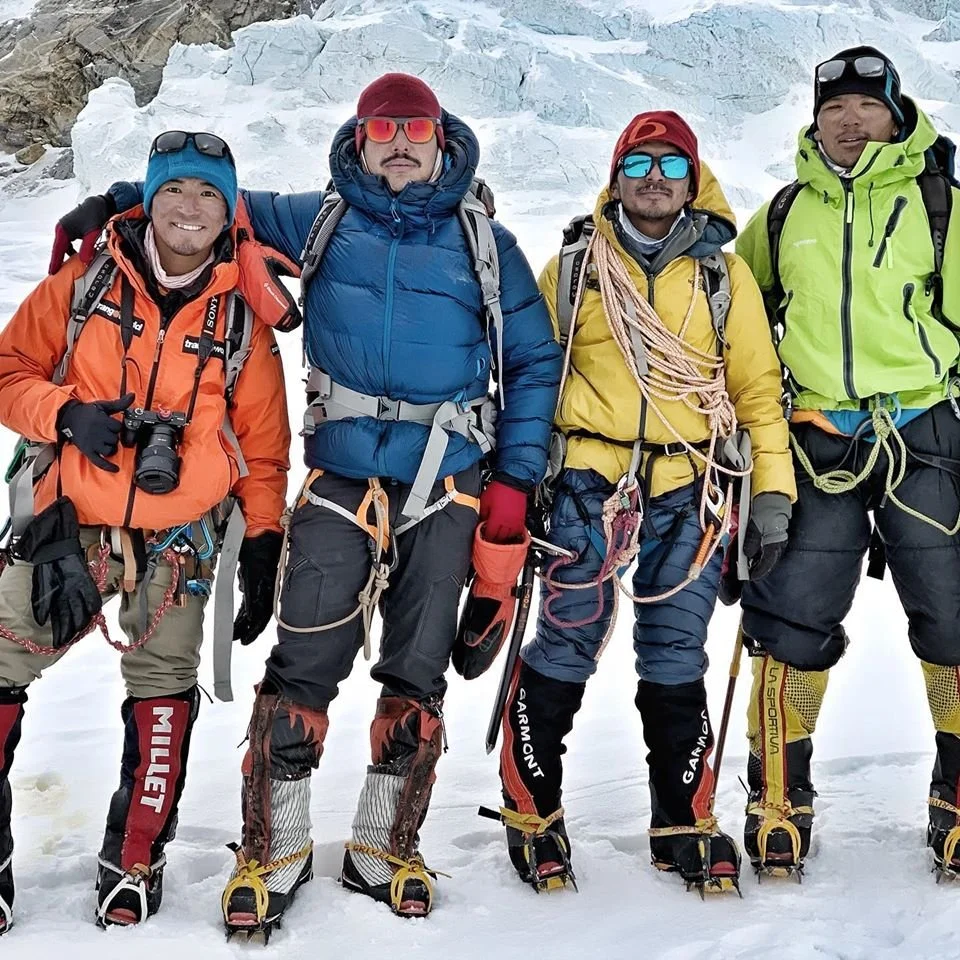
No one reaches the world's highest peaks alone. Behind every successful expedition is a team built on trust, experience, and absolute commitment to one another.
One of the qualities I admired most about Nimsdai was his stubborn refusal to let the Sherpas remain invisible.
For generations, many of the world’s greatest mountaineering stories were told from the perspective of the triumphant climber standing on the summit.
The photograph appeared on magazine covers.
The documentary followed the expedition leader.
The interviews celebrated the client who reached the top.
Meanwhile, the Sherpas—the people who fixed ropes, established camps, carried enormous loads, navigated constantly changing routes, and repeatedly risked their lives so others could safely pursue their dreams—were too often reduced to the background.
Supporting characters.
Anonymous faces.
Almost invisible.
Nimsdai refused to accept that narrative.
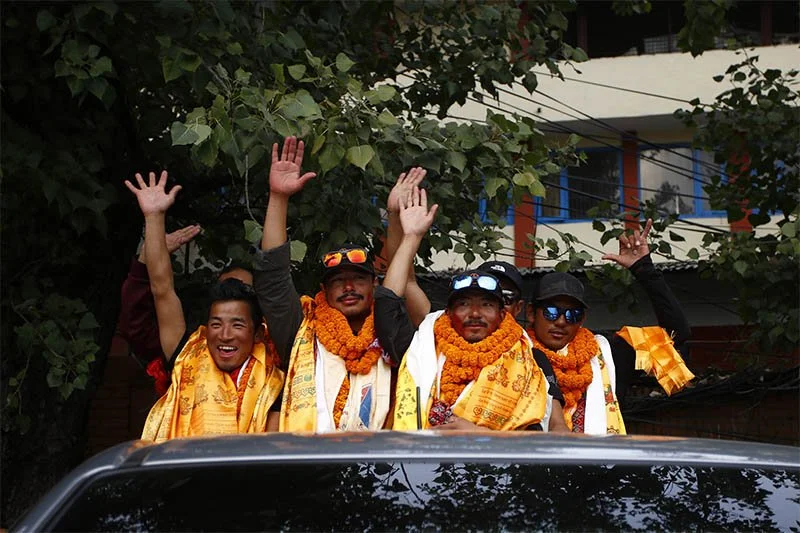
Great achievements are rarely celebrated by the climber alone. They become moments of pride shared by families, teammates, and an entire nation.
He reminded the world that behind many celebrated summits stood men whose names history had rarely bothered to remember.
And perhaps this is where I admired him most.
Leadership is not simply standing in front of the crowd.
Sometimes leadership means turning around and making sure the people behind you are finally seen.
I have always found it strangely amusing when someone proudly declares that they “conquered” Everest.
Conquered?
No, sir.
You did not conquer the mountain.
You survived it.
More importantly, your story was made possible by people whose own stories are too often forgotten.
Some climbers came home with photographs.
Others never came home at all.
The Himalayas and the Karakoram are scattered with bodies that never descended. The mountain does not care how wealthy you are, which passport you carry, or how many followers you have on social media.
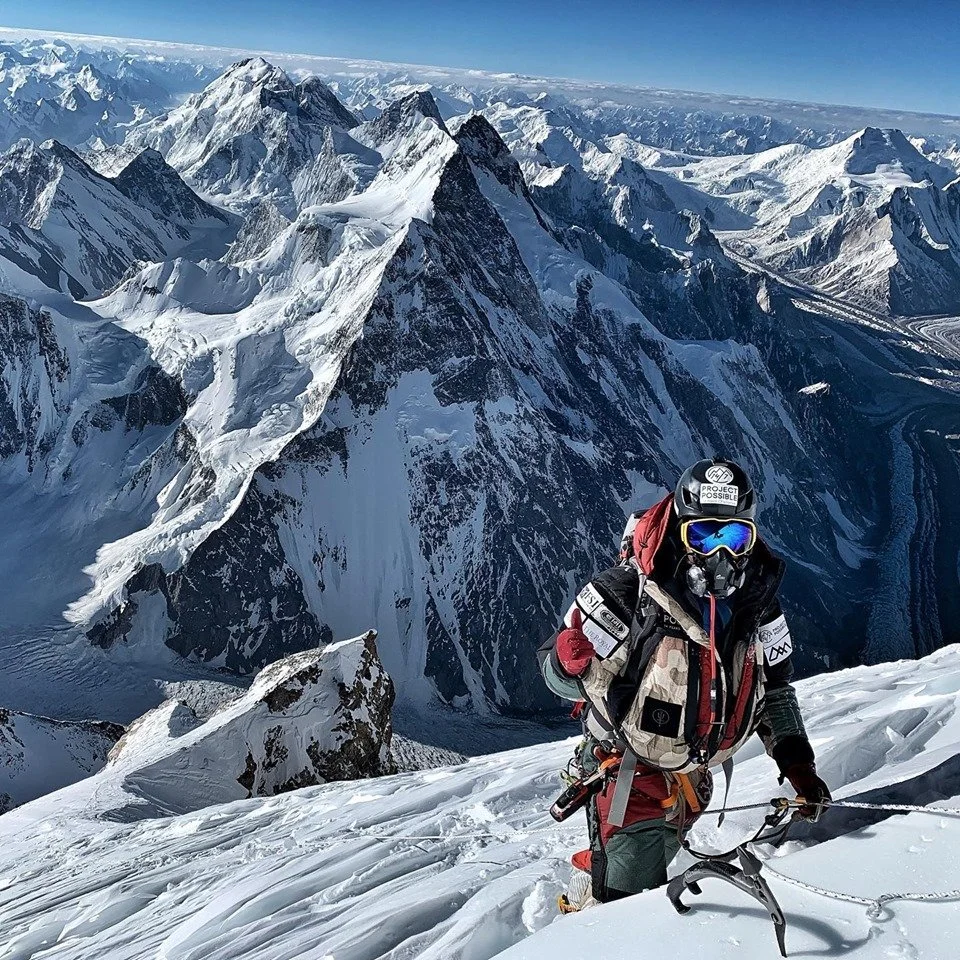
Above 8,000 meters, ambition alone is never enough. Experience, discipline, and sound judgment become just as essential as courage.
It does not negotiate.
Perhaps the Sherpas understand this better than anyone.
Before many expeditions begin, they perform a puja ceremony, asking the mountain for permission and safe passage.
I have always found something profoundly beautiful about that.
It isn’t superstition to me.
It is humility.
It is the quiet acknowledgement that no amount of strength, experience, money, or ambition ever entitles a human being to stand on a summit.
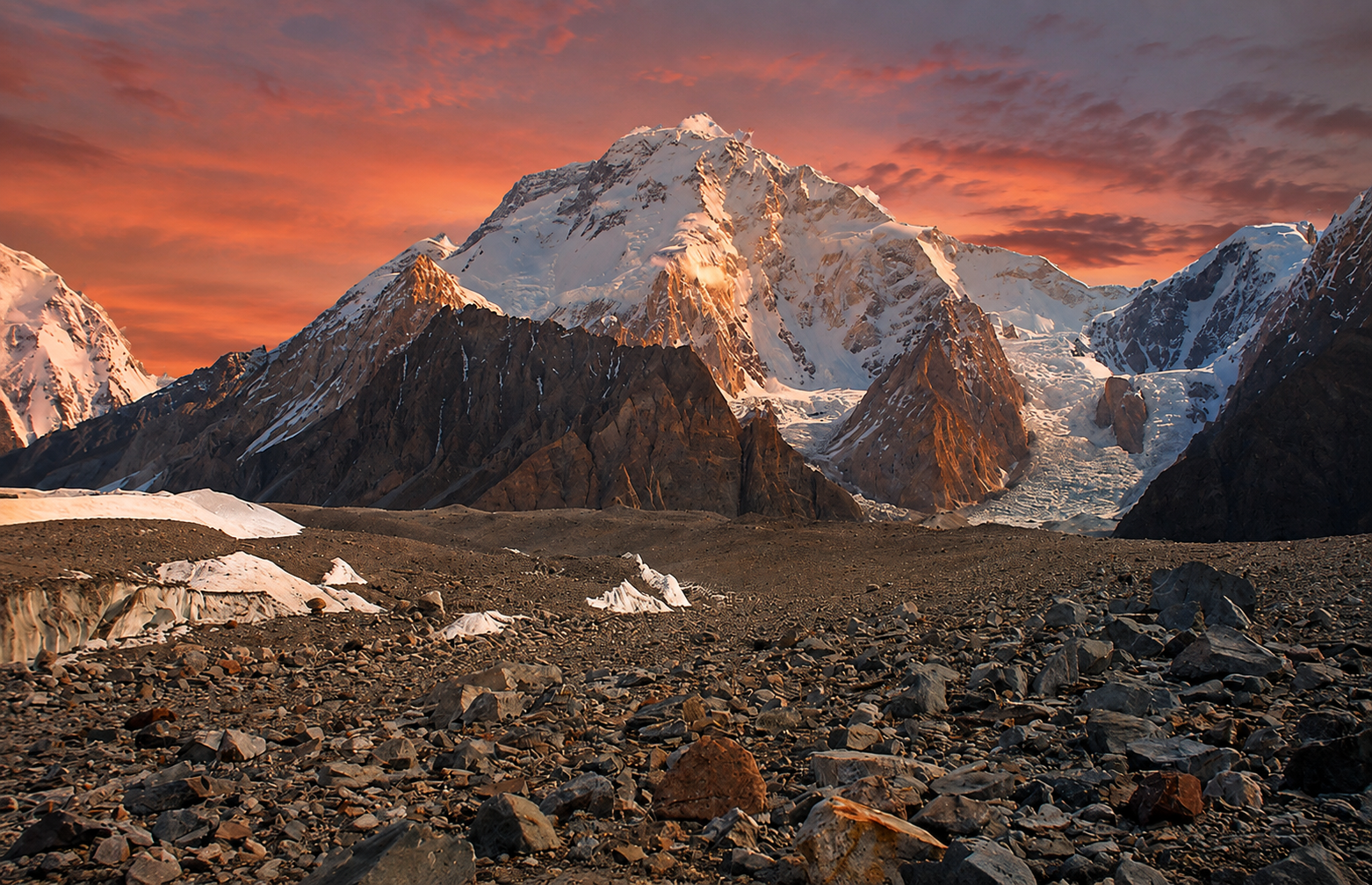
Beauty and danger often share the same horizon in the Karakoram.
You do not conquer the mountain.
The mountain allows your safe passage.
That, to me, is strength.
Not pretending nature is beneath you, but respecting it enough to understand that one avalanche, one storm, or one moment of bad fortune can reduce every human being to the same fragile creature standing beneath something infinitely greater.
Nimsdai seemed to embody both sides of that paradox.
He possessed extraordinary confidence in himself while never forgetting to respect something far greater than himself.
He was fiercely ambitious without surrendering his reverence; unapologetically confident without pretending to be invincible; extraordinarily accomplished without forgetting the people who climbed beside him.
Perhaps that was what captivated me all along.
He wasn’t merely a mountaineer.
He wasn’t merely a record-holder.
He became someone I quietly measured myself against.
The Man Who Stayed: Nimsdai’s Mountain Rescues
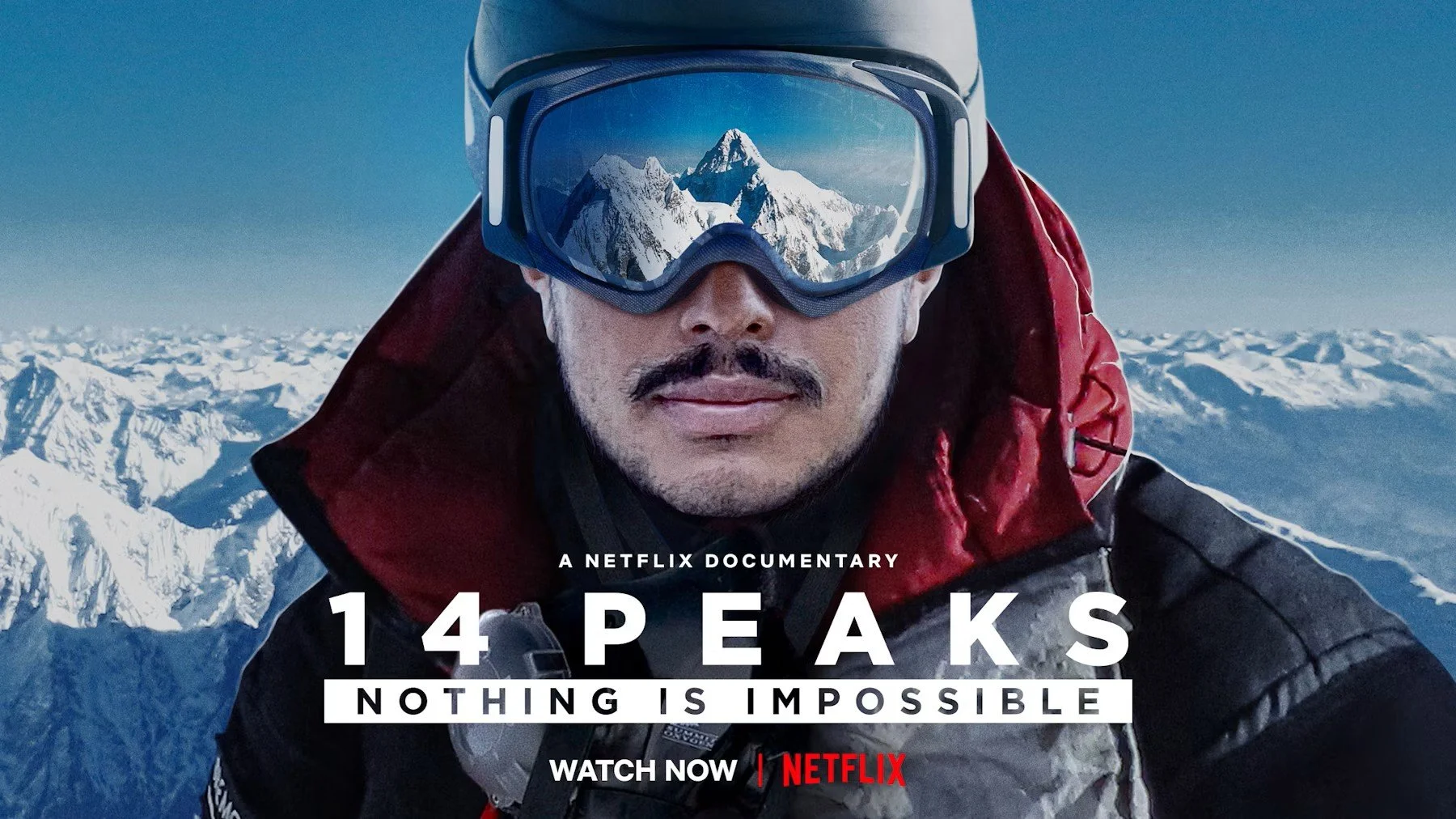
The documentary that introduced millions—including me—to the extraordinary story of Nirmal "Nimsdai" Purja.
I rarely watch documentaries.
Unless David Attenborough or Morgan Freeman happens to be narrating, chances are I will scroll past them without a second thought.
Then one evening, Netflix suggested 14 Peaks: Nothing Is Impossible.
I watched the trailer.
Curiosity won.
The rest is history.
My backside remained practically glued to the sofa, barricaded by three pillows and wrapped in a blanket, while I sweated through scene after scene as though I were climbing beside them.
It didn’t feel as though I were watching a documentary.
It felt as though someone had quietly invited me into the expedition itself.
Every ridge looked steeper.
Every storm felt colder.
Every avalanche sounded louder.
Then came the rescues.
The world record suddenly became secondary.
After summiting Annapurna, Nimsdai and his team returned to the mountain to help rescue Malaysian climber Dr Chin Wui Kin, knowing that the operation would cost them precious time and jeopardise the already punishing schedule of Project Possible.
Weeks later, while descending Kanchenjunga, they encountered climbers in distress high in the death zone. They gave away their own oxygen and remained for hours, waiting for help that did not arrive. Nimsdai himself became dangerously ill while trying to help others survive.
I remember shouting at my television:
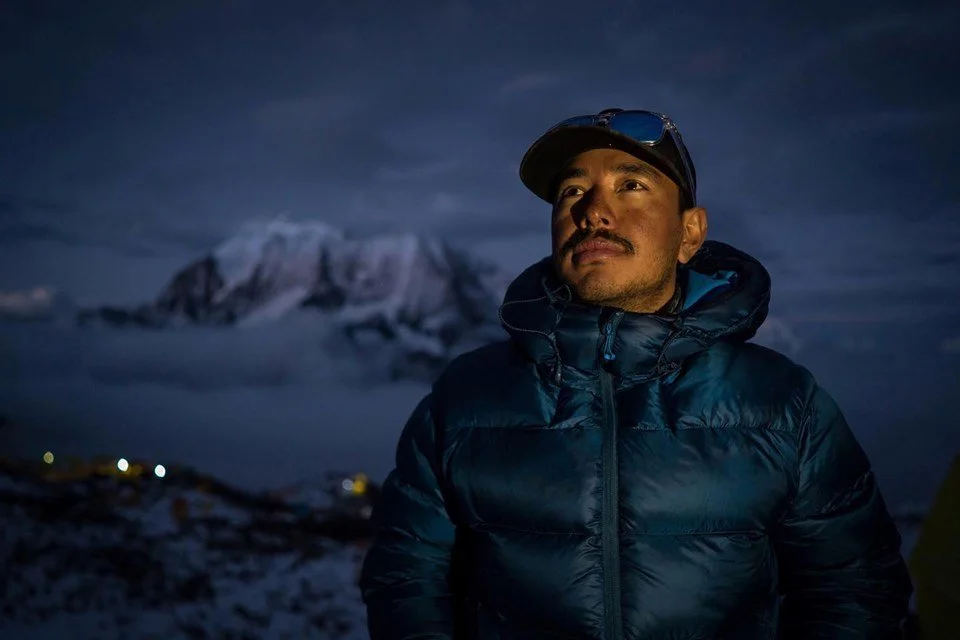
Not every defining moment on an expedition happens while climbing. Some begin in the quiet moments of reflection before the next ascent.
“Damn it, Nimsdai. Please come back alive!!!”
He always did.
That was probably the moment I stopped counting his summits.
I started counting the kind of man he was.
Watching him climb into danger for complete strangers affected me more deeply than any world record could. The goal was supposed to be fourteen summits in seven months, yet when another human life hung in the balance, the stopwatch ceased to matter.
Records measure what a person accomplishes.
Choices reveal who that person is.
Nimsdai’s choices stayed with me.
The Human Behind the Legend
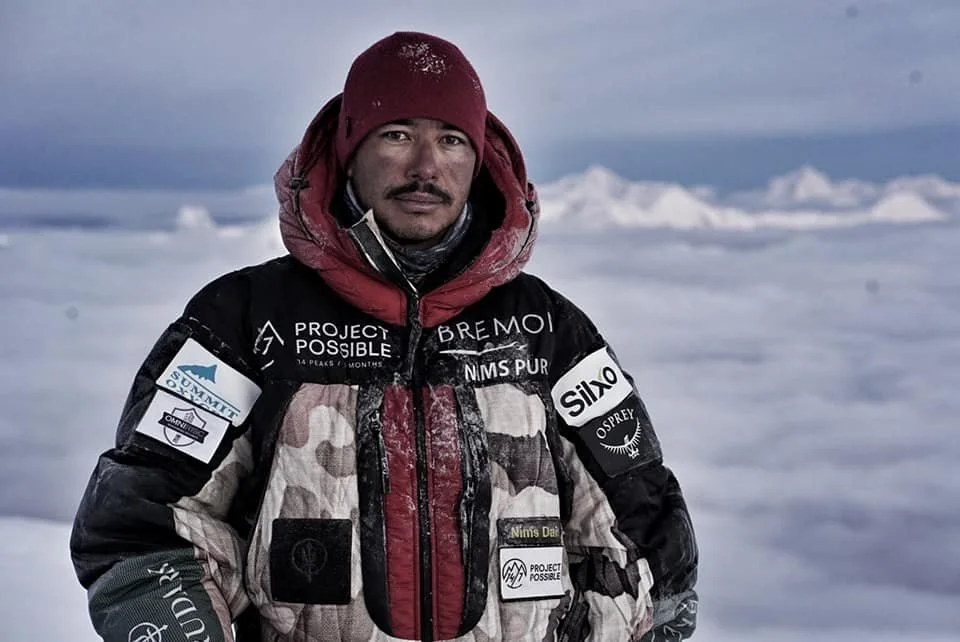
Nimsdai Purja pauses high above the cloud layer during his legendary Project Possible expedition, embodying resilience, humility, and the relentless pursuit of human potential in the Himalayas.
The Smile After the Summit
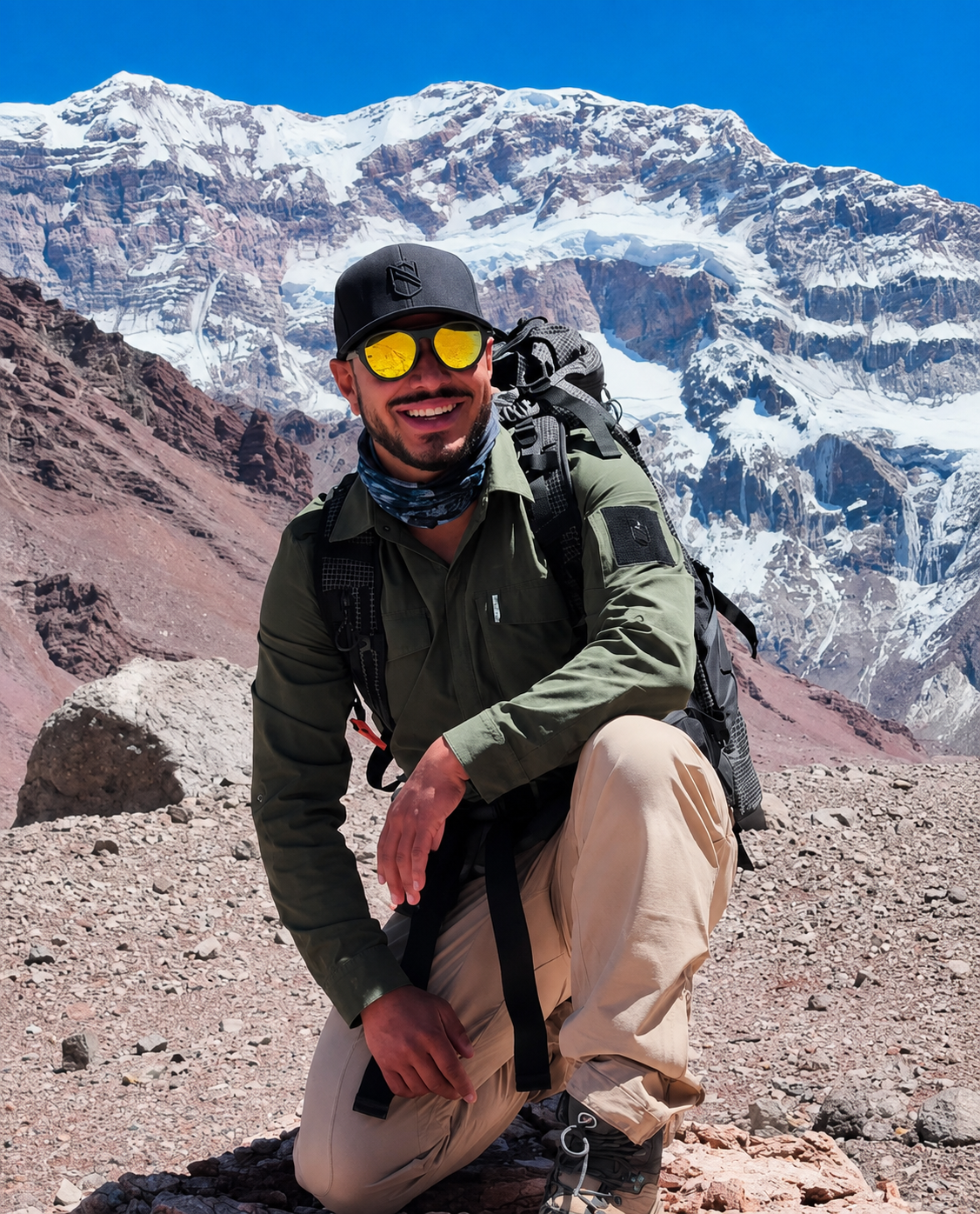
Nimsdai Purja takes a moment to smile during a mountain expedition, reflecting the optimism, resilience, and passion for adventure that defined his mountaineering career.
Then there was his smile.
Warm.
Uncomplicated.
Completely disarming.
Being a woman, my eyes naturally noticed something entirely unrelated to mountaineering.
He had beautiful, full lips.
Then I noticed his slightly crooked teeth and remember thinking:
“Good. At least that flaw demotes him back to being human.”
Too often, we polish extraordinary people into demigods until they no longer resemble flesh-and-blood human beings. We sand away every imperfection, every quirk, every crooked tooth, until what remains is less a person than a marble statue standing on a pedestal.
Nimsdai never needed that.
His imperfections did not diminish him.
They made him easier to love.
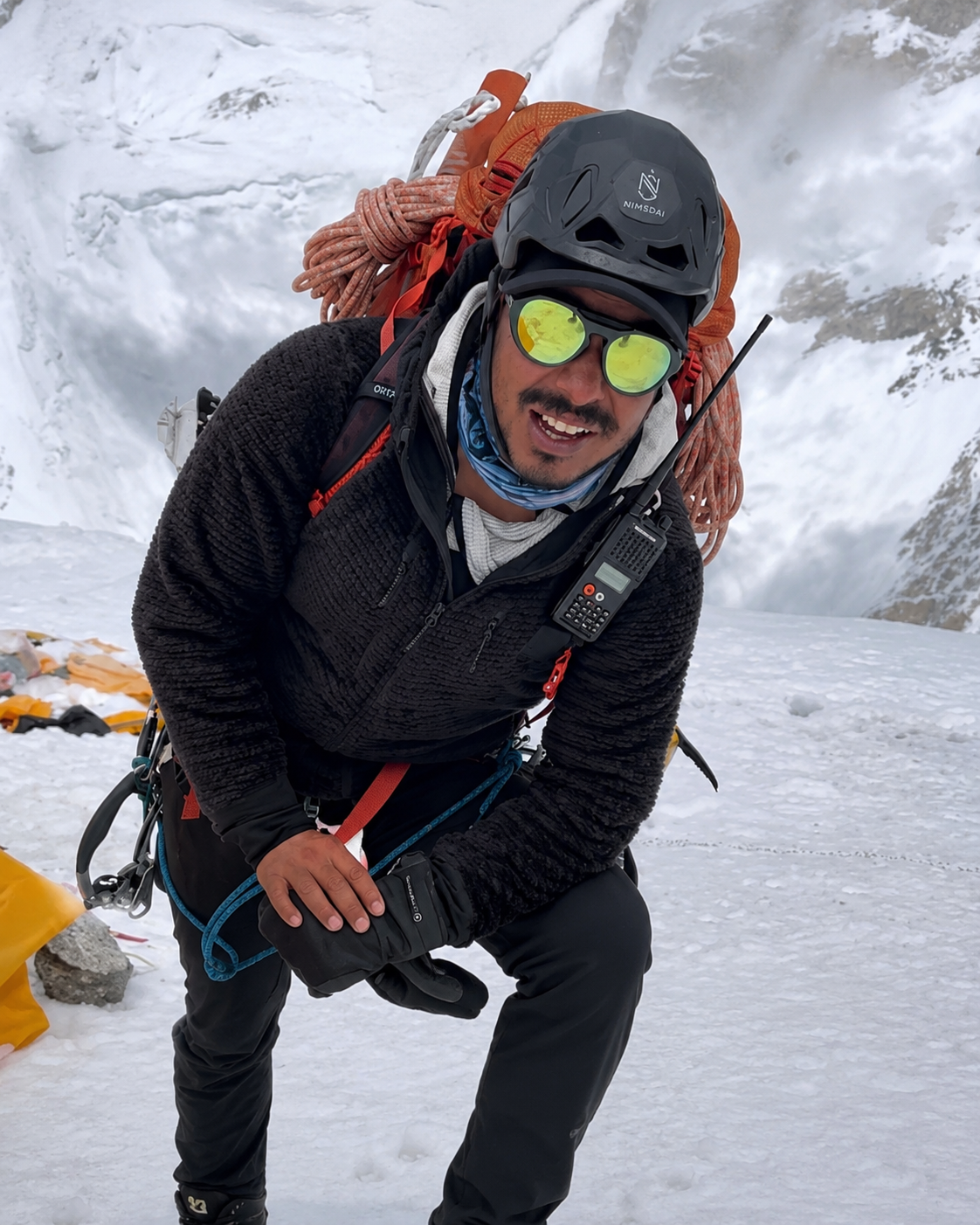
Even at extreme altitude, he wore the same unmistakable smile—a reminder that joy and determination can coexist in the harshest environments on Earth.
Of course, I loved seeing the iconic summit photographs—the triumphant smile, the prayer flags, the impossible backdrop of snow and sky.
But I found myself loving something else just as much.
The moments after the descent.
The climbing was over.
The danger had passed.
The entire team celebrated.
There he was, laughing with his mates and dancing with an enthusiasm that was equal parts ridiculous, joyous, and impossibly cool while everyone happily chugged whatever mysterious Sherpa potion they happened to be celebrating with.
I have absolutely no idea whether those dance moves were traditional Nepali, completely improvised, or simply what happens after surviving another expedition.
I only know that they made me grin.
You goofy-looking Iron Man.
Hours earlier, he had looked almost frighteningly disciplined, measured, and focused in the death zone.
Now he was dancing like the happiest bloke in the room.
The contrast should not have worked.
Somehow, it worked perfectly.
The Beautiful Paradox
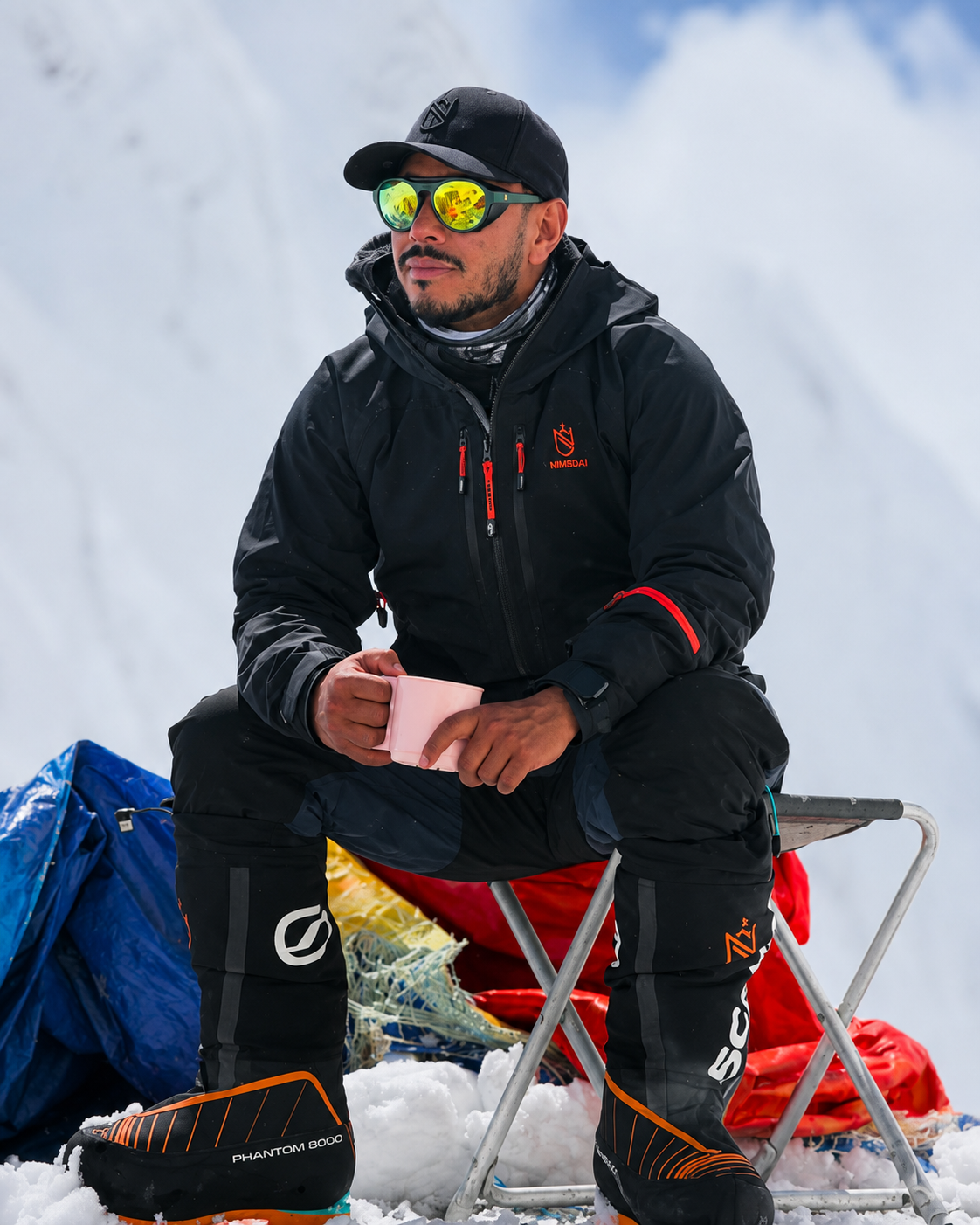
Nimsdai Purja resting at a high-altitude camp during a Himalayan mountaineering expedition. Expedition camps provide climbers with opportunities to recover, hydrate, and prepare for the next stage of the ascent.
That was the thing about Nimsdai: he never fitted neatly into one description.
He constantly created little paradoxes of himself.
His smile made impossible goals appear attainable.
His humour dissolved the distance between legend and ordinary human being.
His celebrations reminded me that surviving is not enough.
You should also know how to live.
He wasn’t merely chasing summits.
He genuinely seemed to enjoy being alive.
There was something mesmerising about watching a man spend weeks negotiating with death, only to return laughing as though the mountain had simply borrowed him for a while.
Perhaps that is why he never felt untouchable.
He did not inspire me because he appeared superhuman.
He inspired me because he showed me that extraordinary courage can still laugh, dance, celebrate—and have slightly crooked teeth.
The Broad Peak Avalanche
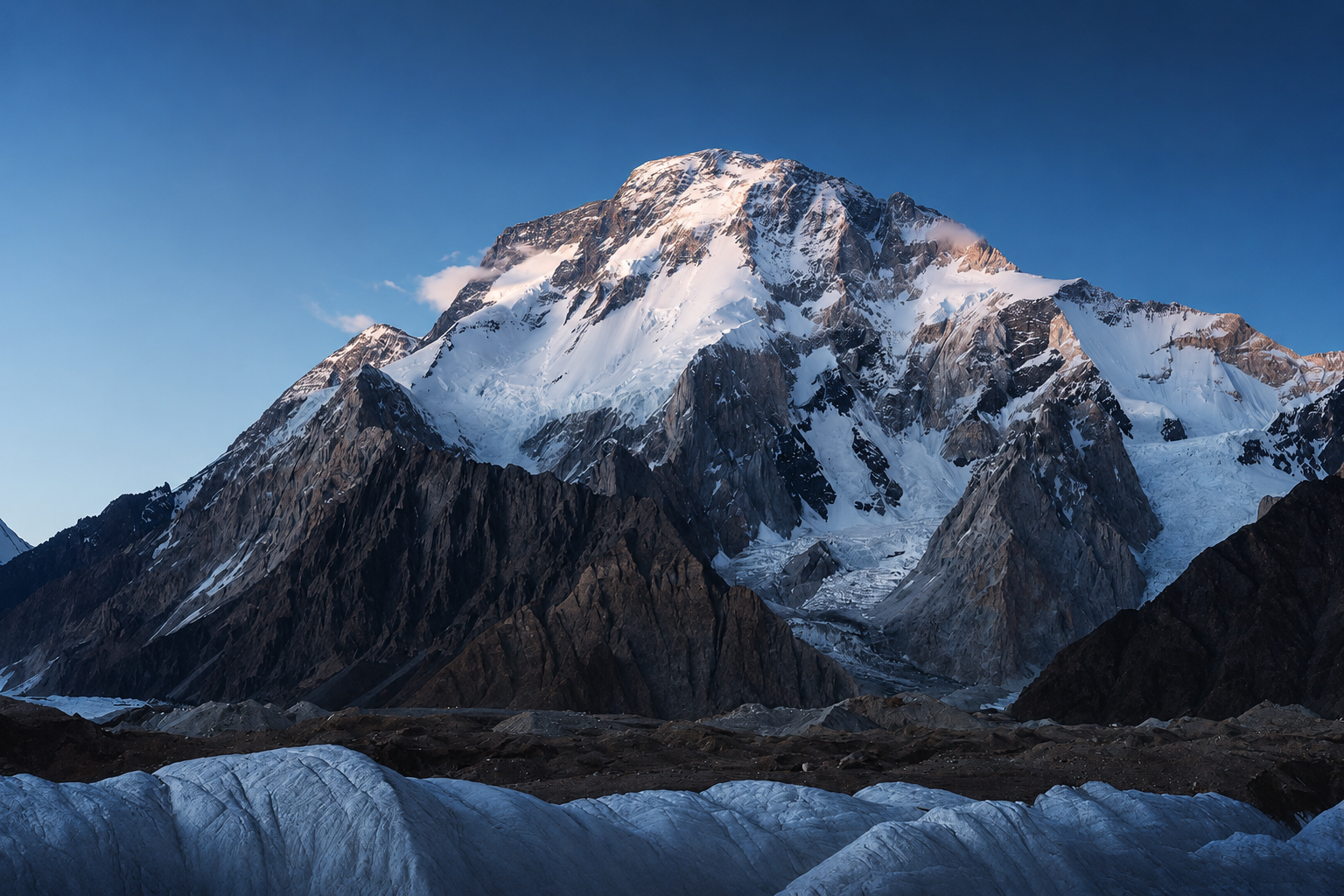
Broad Peak (8,051 m) rises above the Baltoro Glacier in Pakistan's Karakoram Range. As the world's twelfth-highest mountain, it is renowned for its challenging terrain, extreme weather, and significance in high-altitude mountaineering.
Then the Mountain Answered
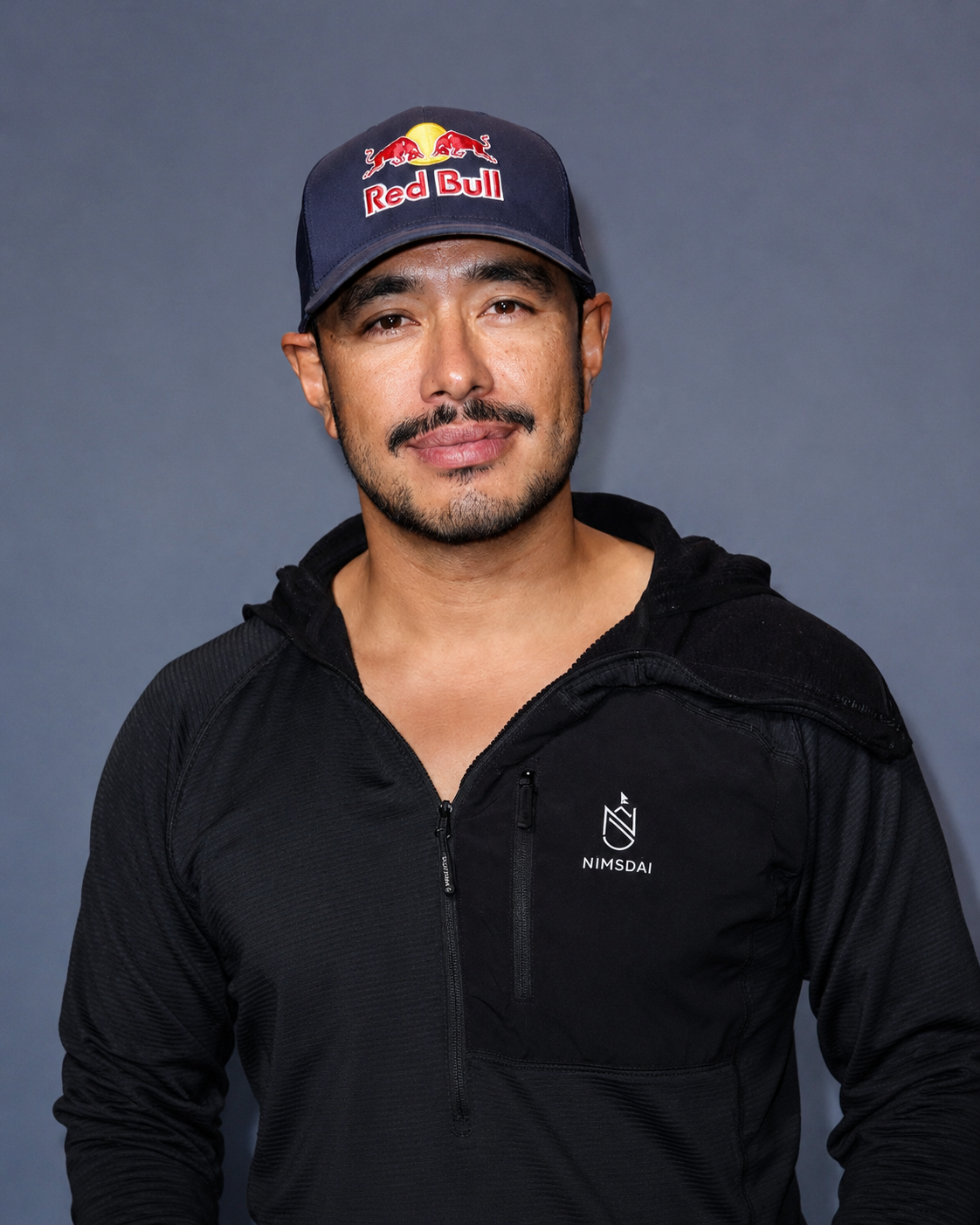
Portrait of Nimsdai Purja, the elite Nepali mountaineer known for Project Possible and his achievements on the world's highest mountains. His leadership and climbing accomplishments have made him one of the most recognized figures in modern mountaineering.
There is a strange thing the human mind does when it loves someone it has never met.
It quietly rewrites the laws of probability.
After watching Nimsdai repeatedly return from places where most people would not survive a single afternoon, I had unconsciously promoted him into something he had never claimed to be.
Not immortal.
Not invincible.
But close enough that my heart had stopped distinguishing between the two.
A demigod.
When the first reports appeared saying that he was missing after an avalanche on Broad Peak, I was not nearly as frightened as I should have been.
Not because I underestimated the mountain.
Quite the opposite.
I overestimated Nimsdai.
“It’s Nimsdai,” I told myself.
He will find something to hold on to.
He will brace for the impact.
He will come back bruised.
Broken, perhaps.
But he will come back.
How could he not?
Nimsdai always came back.
Until he didn’t.
Why Do People Climb Mountains?
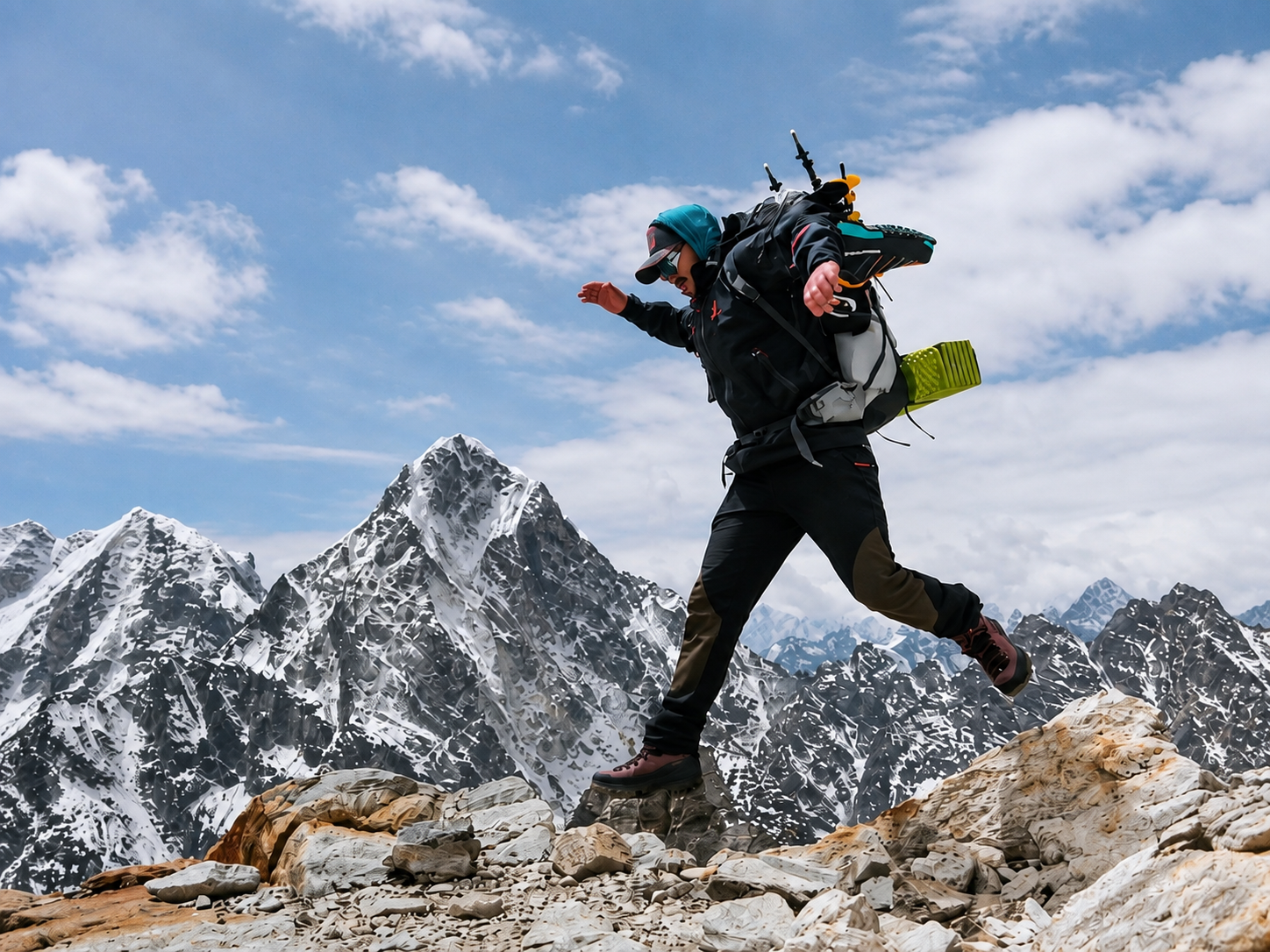
Nimsdai Purja traverses a rocky mountain ridge during a high-altitude expedition. Technical movement, balance, and efficient travel across rugged terrain are essential skills in alpine climbing and Himalayan mountaineering.
The Wrong Question
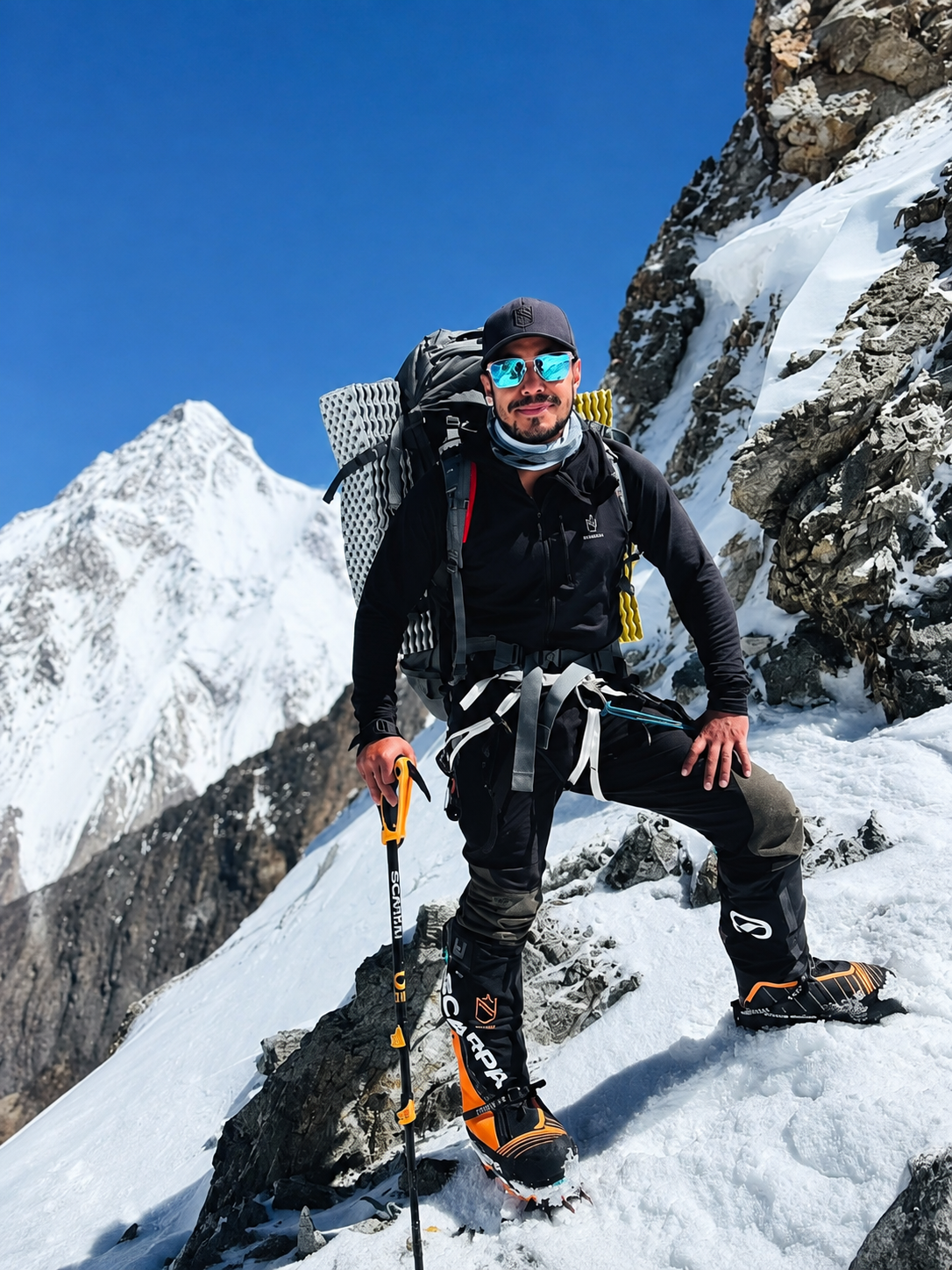
Nimsdai Purja pauses on a steep, snow-covered mountain ridge during a high-altitude expedition. Alpine climbing in this terrain requires technical skills, specialized equipment, and careful movement through snow and exposed rock.
Whenever a mountaineer dies, someone inevitably asks:
“They knew the risks. Why should we feel sorry for them?”
At first glance, the question appears reasonable.
Yet beneath it lies a troubling assumption: that a human life is valuable only insofar as it produces something useful.
A firefighter risks her life to save someone trapped in a burning building.
A scientist exposes himself to dangerous pathogens in search of a cure.
A soldier throws herself between danger and the people behind her.
We instinctively understand those risks because their purposes are obvious.
The benefit is visible.
The outcome is measurable.
But a mountaineer?
What exactly is waiting at the top of an 8,000-metre mountain?
No cure.
No burning building.
No strategic military objective.
Just snow.
Rock.
Ice.
Thin air.
So the question quietly becomes:
What was the point?
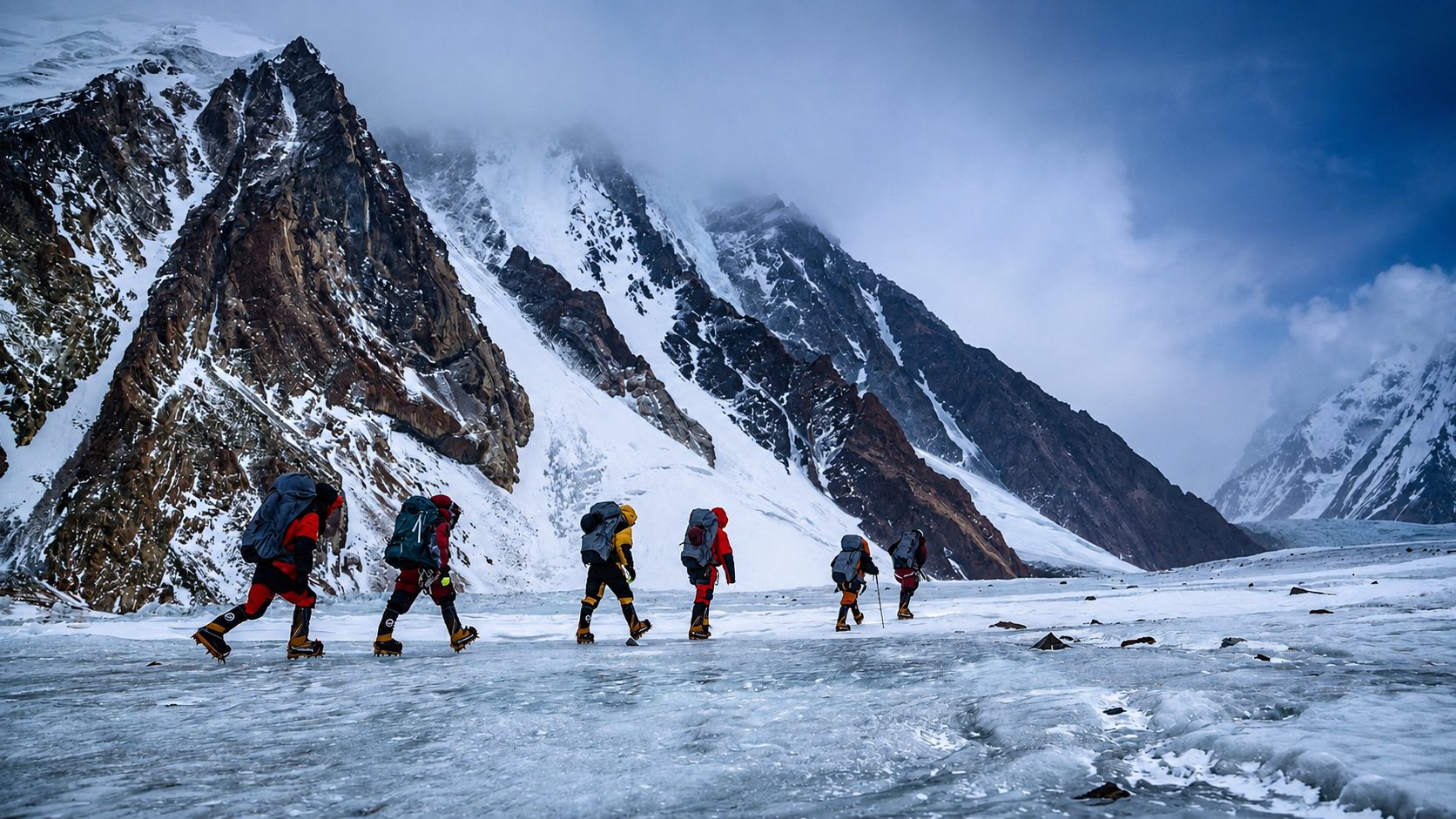
A mountaineering team crosses a glacier during a high-altitude expedition in the Karakoram. Glacier travel demands teamwork, route planning, and constant awareness of changing snow, ice, and weather conditions.
But perhaps that is the wrong question.
Perhaps the deeper question is not, “Why climb mountains?”
Perhaps it is:
What counts as a meaningful human life?
The Ends We Choose
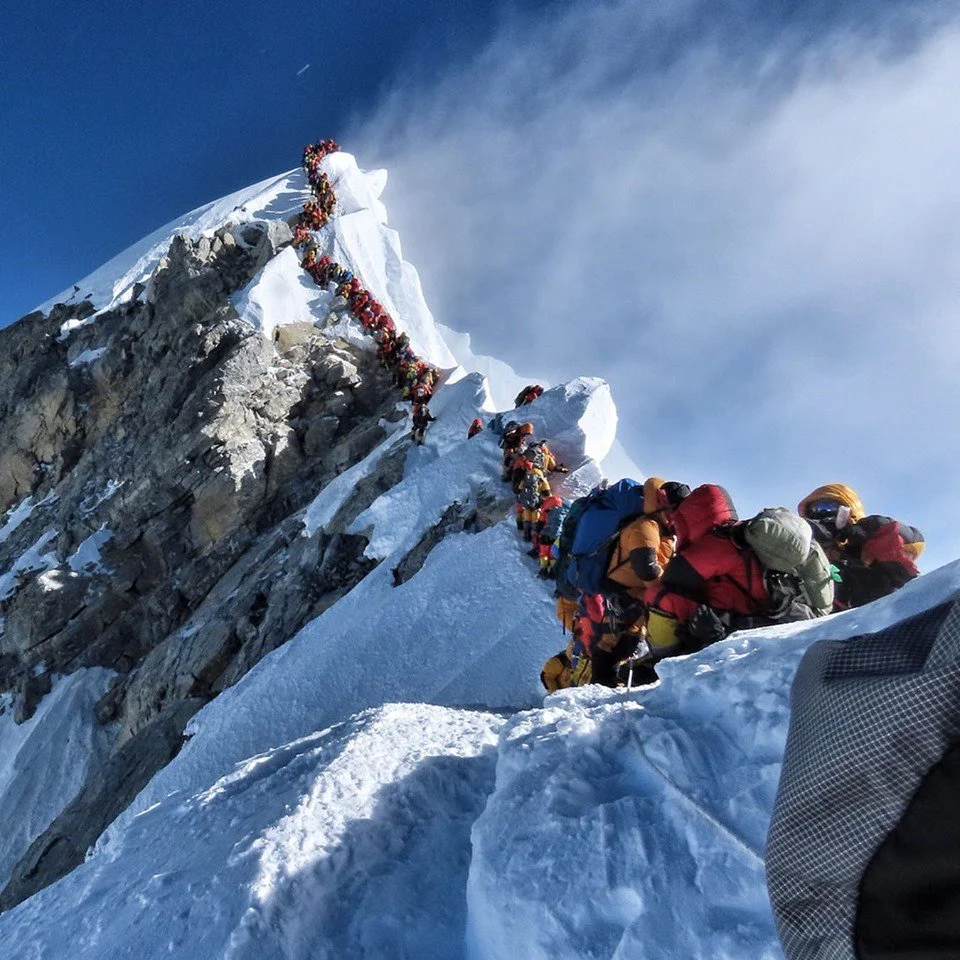
The iconic 2019 photograph captured by Nimsdai (Nirmal Purja) shows climbers queued near the Hillary Step on Mount Everest. The viral image drew worldwide attention to summit congestion and the growing challenges of overcrowding during the Everest climbing season.
More than two thousand years ago, Aristotle distinguished between things we pursue as means and things we pursue as ends.
Some things matter because they lead to something else.
Money.
Status.
Power.
They are useful because they buy, unlock, or produce something beyond themselves.
But other things possess value not merely because of what they produce, but because they are worth pursuing in their own right.
Friendship.
Beauty.
Truth.
Courage.
Excellence.
The ancient Greeks had a word for excellence of character and capability:
Arete.
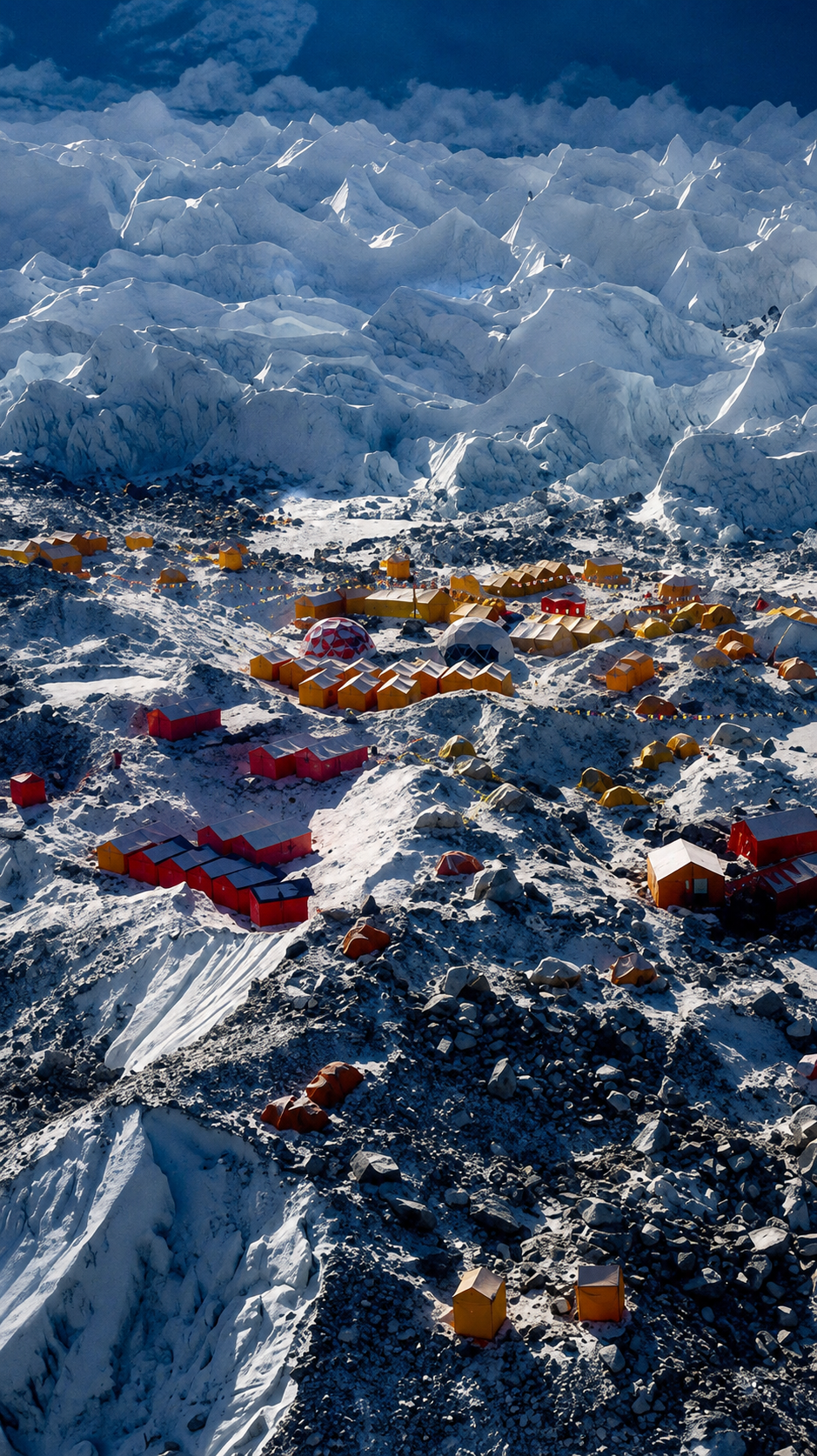
An aerial view of Everest Base Camp in Nepal shows hundreds of expedition tents spread across the Khumbu Glacier beneath the Khumbu Icefall. The seasonal camp serves as the primary staging area for climbers attempting Mount Everest.
It did not mean flawlessness. Nor did it mean victory, fame, or superiority over others.
It referred to the fullest expression of what a person—or anything—was capable of becoming.
This distinction matters because much of modern life trains us to justify everything through utility.
What does it produce?
How much does it pay?
Will it improve your career?
Can it be monetised?
Is it efficient?
We have become so accustomed to measuring value through output that a pursuit undertaken for its own sake can look almost irresponsible.
Yet some of the most meaningful parts of being human resist calculation.
We do not love because it is efficient.
We do not create art because every painting will alter history.
We do not seek beauty because beauty guarantees our survival.
And some people do not climb mountains because a useful object is waiting at the summit.
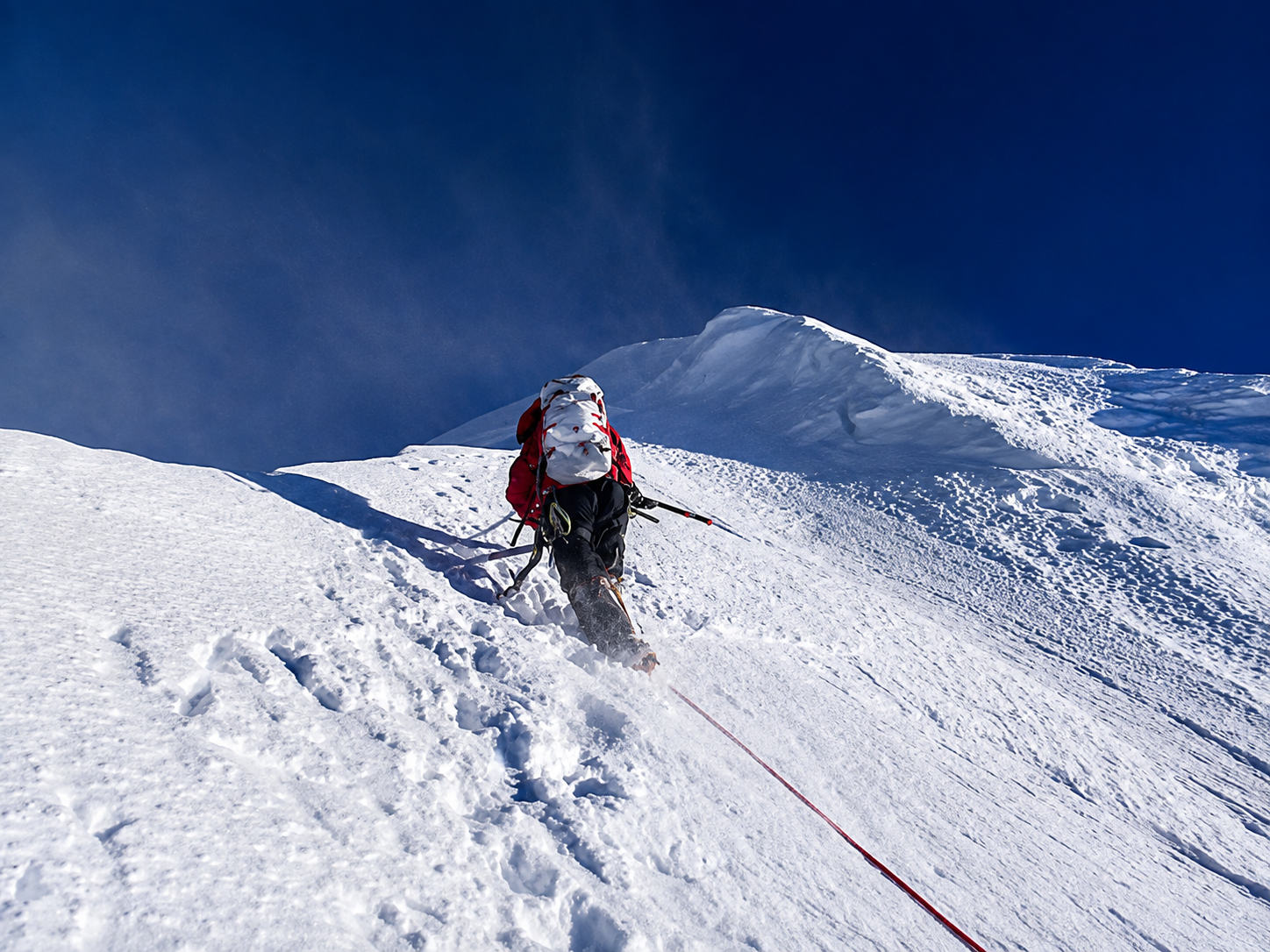
They climb because the pursuit asks something of them that ordinary comfort never could.
Discipline.
Courage.
Humility.
Endurance.
Trust.
The willingness to meet the boundaries of their own humanity and discover whether those boundaries can move.
Why He Climbed
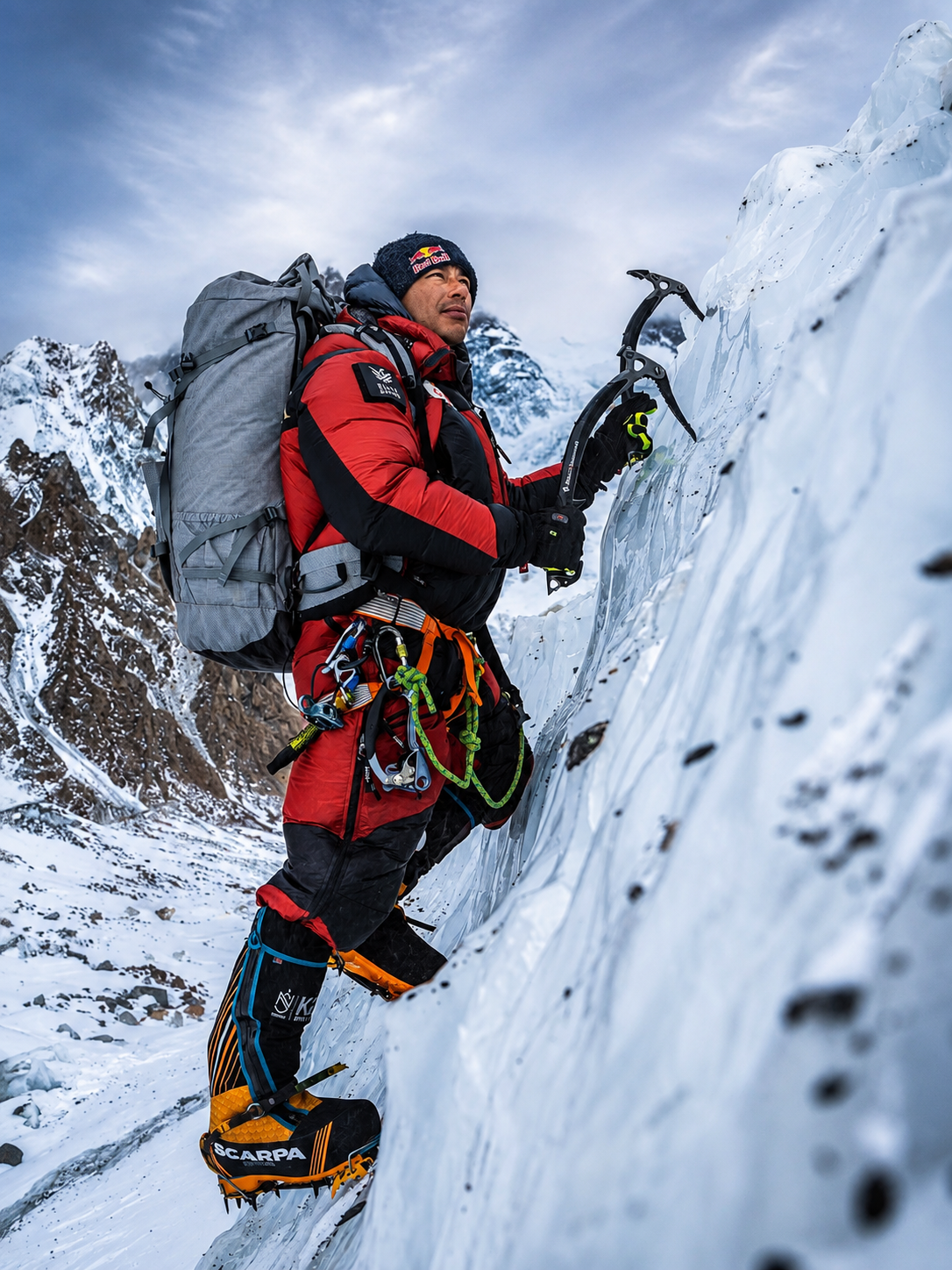
Nimsdai (Nirmal Purja) climbs a steep snow slope during a high-altitude Himalayan expedition. The image highlights technical mountaineering, fixed-rope climbing, and the demanding conditions encountered on major alpine ascents.
Perhaps that is why I have never been able to dismiss mountaineering as pointless.
The summit was never the point.
The mountain revealed the person climbing it.
It stripped away wealth, status, pretence, and self-deception. At altitude, ambition alone was useless. A climber needed judgement, endurance, courage, teamwork, and humility before forces that could never be controlled.
Nimsdai wasn’t merely chasing altitude.
He was pursuing excellence.
Not because excellence guaranteed success.
Not because it was safe.
Not because a summit could ever repay the price demanded by the mountain.
He pursued it because he believed that becoming the fullest version of himself was reason enough.
That is not the same as saying every risk is wise or every expedition justified. Admiration should not require us to pretend that danger is noble simply because someone chooses it.
It means only that safety cannot be the sole measure of a meaningful life.
A life devoted entirely to avoiding danger may last longer.
That does not necessarily mean it has been more fully lived.
Perhaps that is why his story reached someone like me—an ordinary woman living thousands of kilometres away.
Not because I wanted to climb Everest.
Not because my mountains resembled his.
But because I recognised the same question in my own life:
What is worth pursuing simply because pursuing it makes you more fully human?
Nimsdai’s Legacy
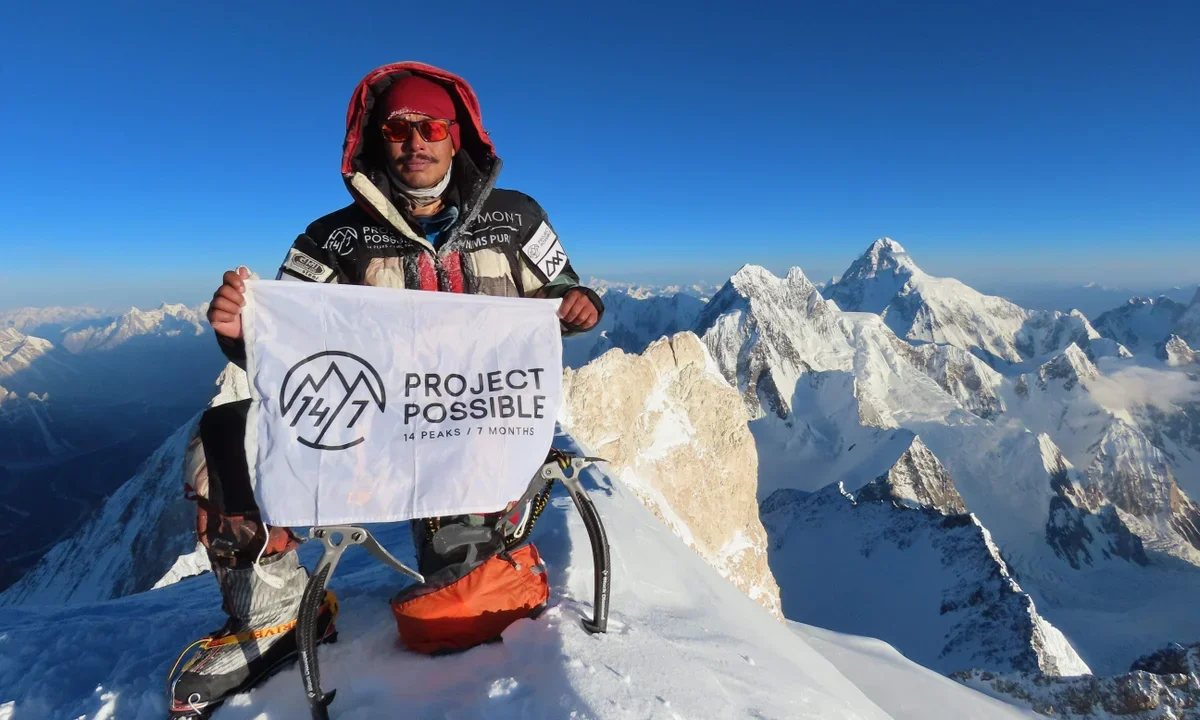
Nimsdai (Nirmal Purja) ascends a steep section of glacier ice using technical ice-climbing equipment, including dual ice axes and crampons. The image demonstrates the precision, strength, and technical skills required for high-altitude Himalayan mountaineering.
What the Mountain Could Never Bury
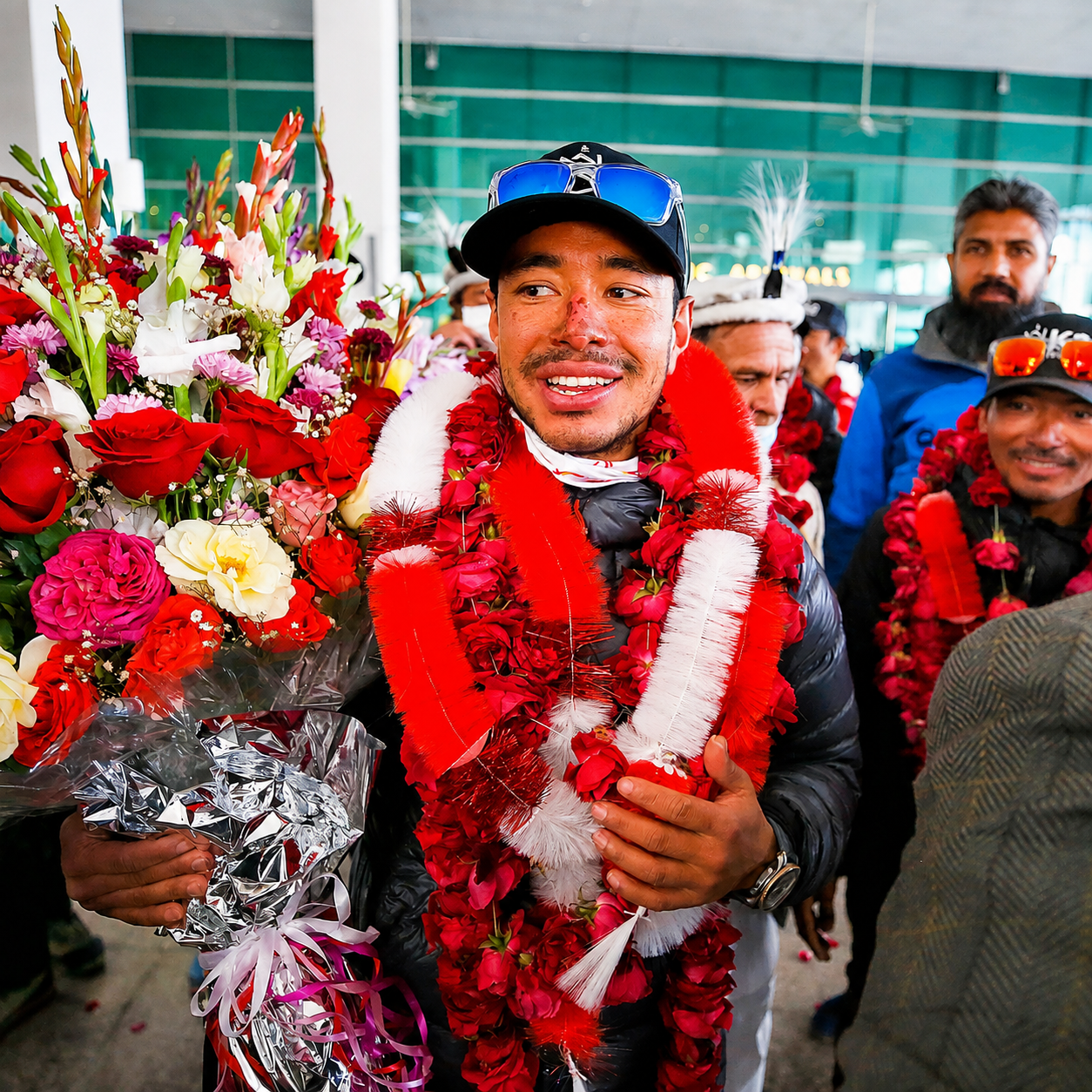
Nimsdai (Nirmal Purja) is welcomed with flower garlands and bouquets during a homecoming celebration in Nepal after completing a major Himalayan mountaineering achievement. The reception reflects the national pride and recognition he received for his climbing accomplishments.
People often ask what a remarkable person left behind.
With Nimsdai, the obvious answers are easy.
Fourteen summits.
World records.
Films.
Books.
Photographs.
History.
But I think those answers miss something.
Because none of them is what I carry with me into the mountains.
I carry a voice.
“Giving up is not in the blood.”
An avalanche could take the man.
It could not take what the man awakened in others.
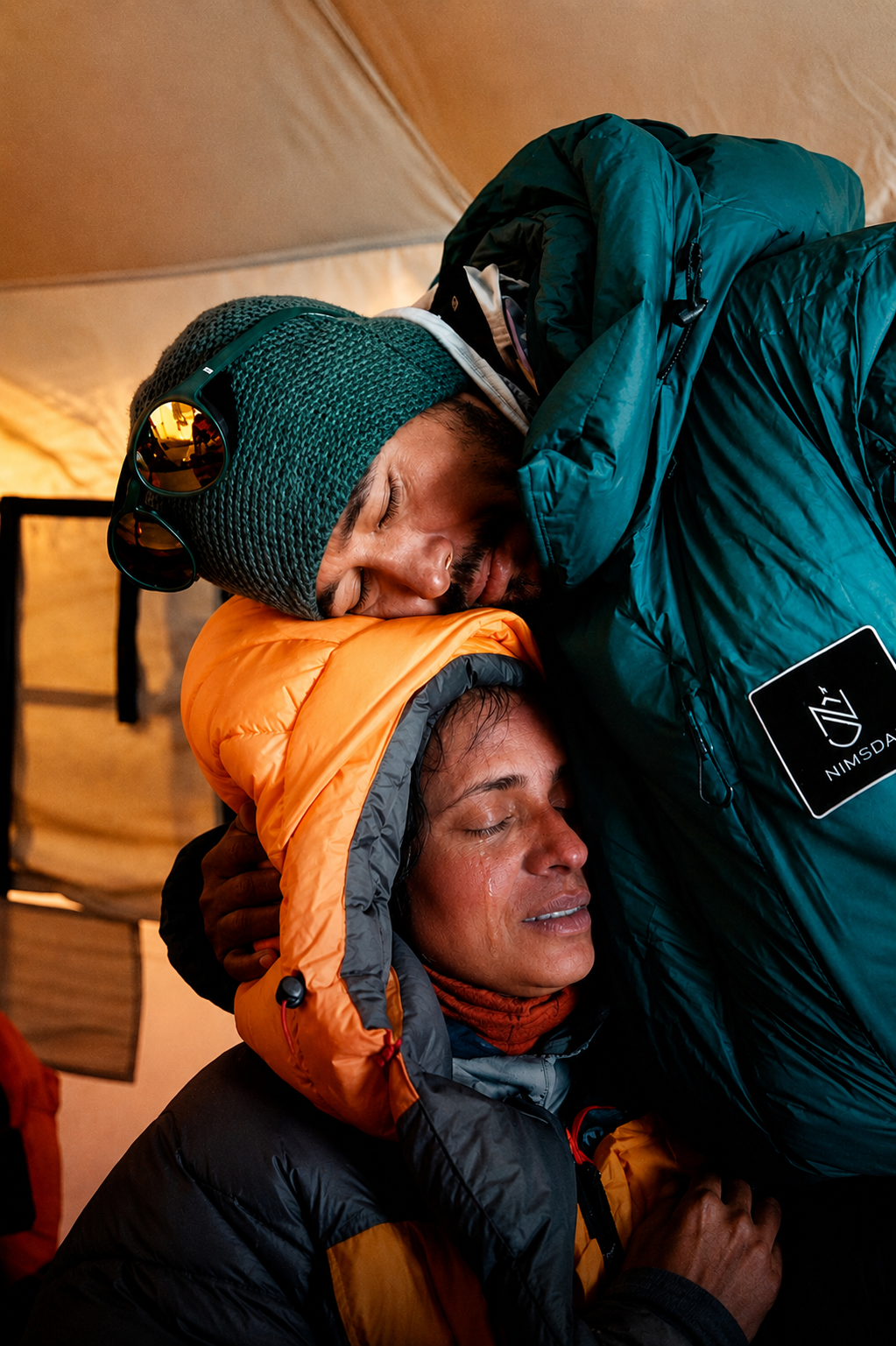
Nimsdai (Nirmal Purja) shares an emotional embrace with a fellow expedition member inside a mountain expedition tent. The image reflects the human side of high-altitude mountaineering, where teamwork, support, and shared experiences are as important as reaching the summit.
That still walks.
That still climbs.
That still whispers courage into ordinary people standing before ordinary mountains.
Some happen to be made of snow.
Others are not.
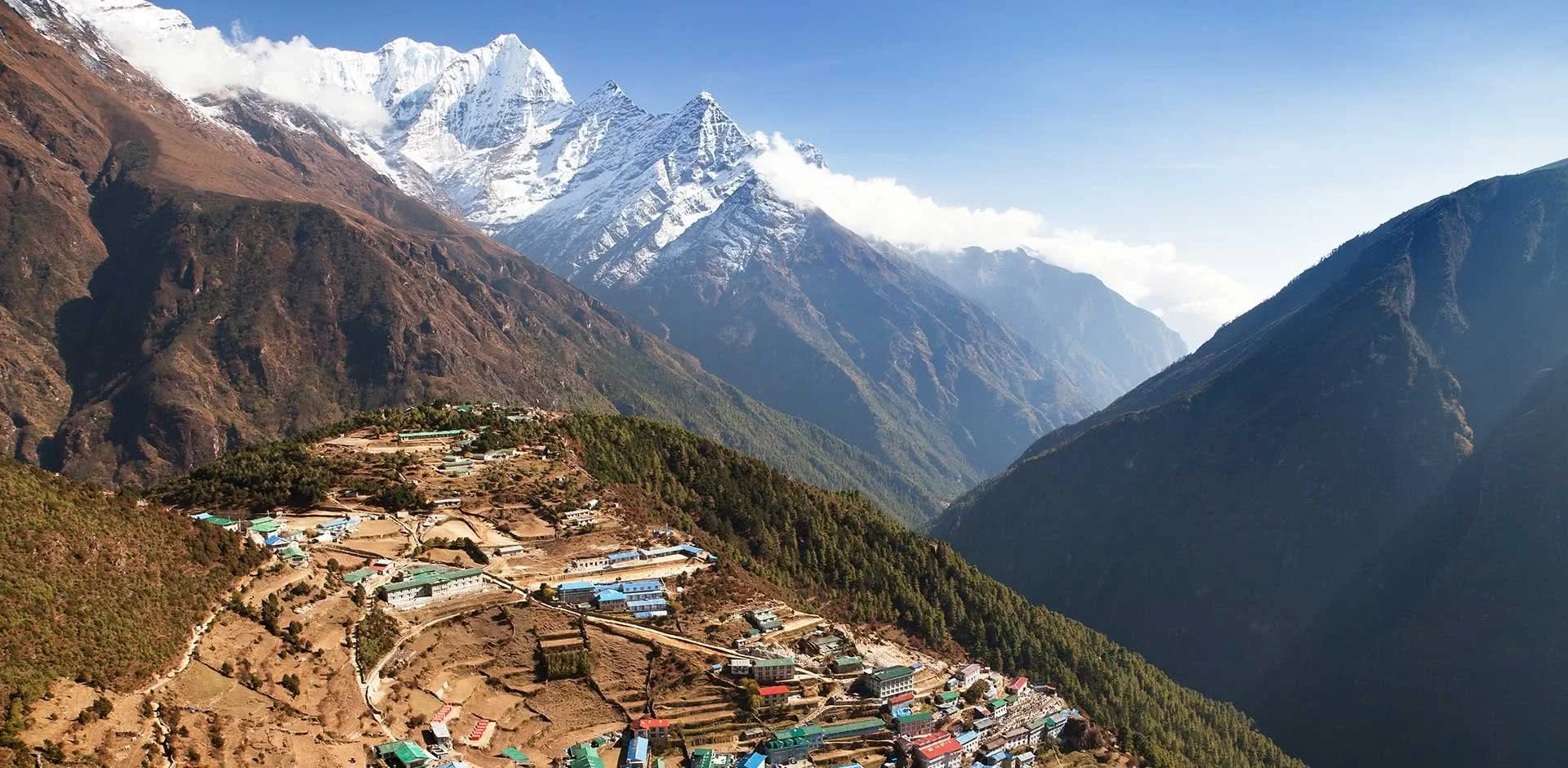
An aerial view of Namche Bazaar, the gateway to the Everest region in Nepal. Located in the Khumbu Valley, the Sherpa town serves as a major acclimatization stop for trekkers and mountaineers traveling to Everest Base Camp.
I still hike.
Sometimes with too much wine in my bloodstream from the night before.
Sometimes wondering why I ever thought carrying a backpack uphill sounded like an enjoyable way to spend a perfectly good day.
My lungs still complain.
My calves still unionise.
My brain still negotiates surrender.
And every now and then, there he is again.
Not standing on Broad Peak.
Not on Everest.
Not in Nepal.
Right here.
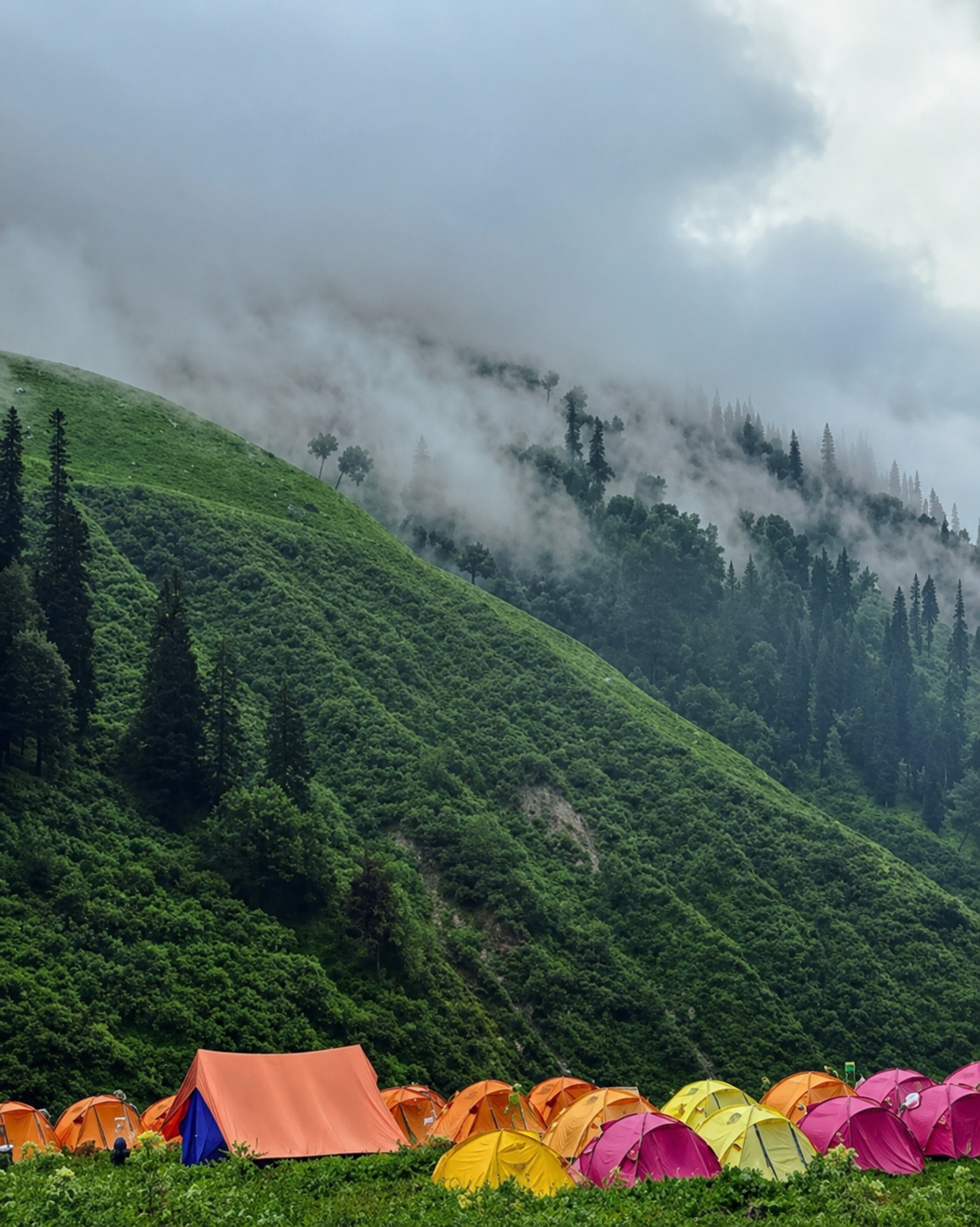
A mountain campsite in the Himalayas with colorful expedition tents set against green alpine hills, forests, and drifting clouds. Such camps provide temporary shelter for trekkers and mountaineers exploring remote Himalayan valleys and high-altitude trails.
Quietly reminding me to keep walking.
The mountain never needed another climber.
It had stood for millions of years before Nimsdai arrived, and it will stand for millions more.
But somewhere along the way, an ordinary woman in Norway discovered that she needed him.
Not because she needed someone to conquer mountains for her.
But because she needed someone to remind her that a human life can be aimed at something greater than comfort.
Greater than accumulation.
Greater even than fear.
The mountain didn’t need Nimsdai.
We did.
And perhaps that is why, even now, my talisman remains.
