The End
Everyone Keeps Predicting the End.
No One Is Teaching People How to Live Through It.
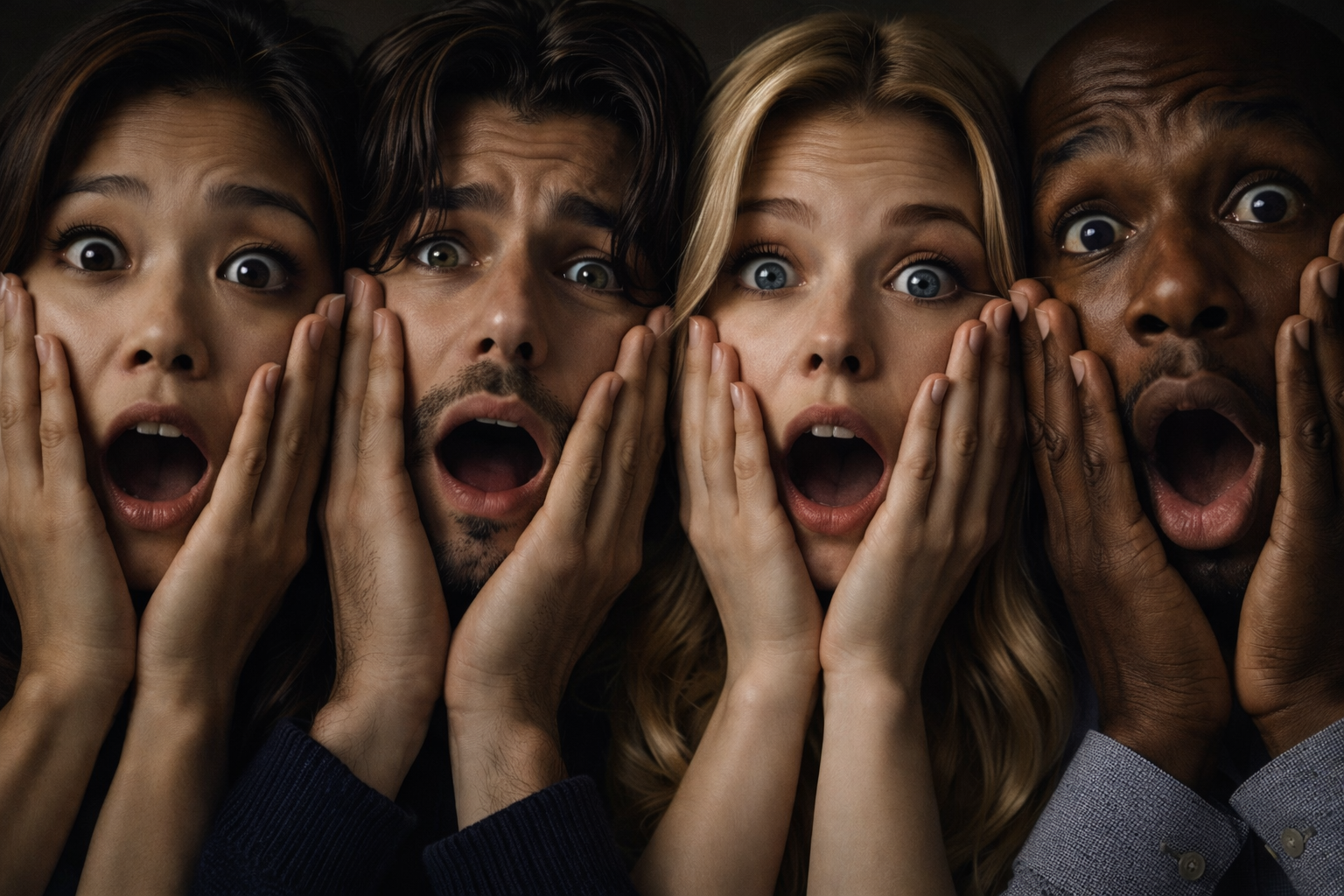
Many faces, one fear
shadows sharpen ancient alarms
panic spreads faster
Lately, it feels like everywhere you turn — news, podcasts, social media, think-pieces — someone is explaining, in great detail, how our civilization is collapsing.
Economics. Climate. Politics. Social cohesion. Birth rates. Trust. Systems. Empires.
And look — I’m not arguing with the diagnosis.
Anyone paying attention can see that something is fraying.
What I am arguing with is the way this information is being delivered.
Because after the analysis comes… nothing.
No grounding.
No orientation.
No guidance for the people who still have to wake up tomorrow, go to work, raise kids, cook dinner, and keep their nervous systems intact.
Just fear — stirred, amplified, monetized — and then abandoned.
And honestly?
It’s starting to get on my nerves.
The Problem Isn’t Awareness — It’s Incompleteness
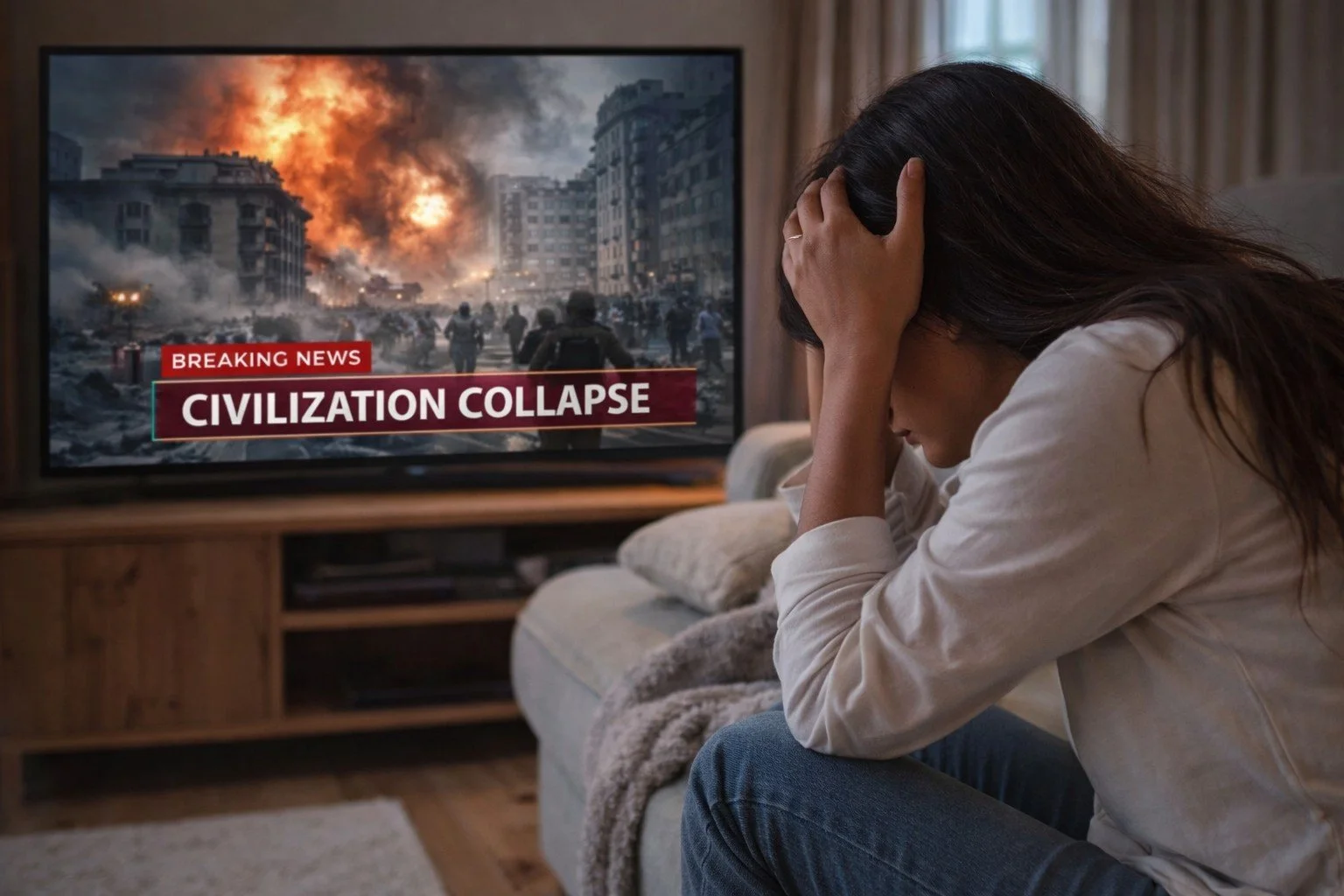
Screens shout danger loud
living rooms feel the sirens
fear travels faster
Awareness without agency is not education.
It’s agitation.
A lot of modern collapse commentary stops at the scariest possible sentence:
“Things are going to get worse.”
Okay.
So?
That’s not a plan.
That’s not even wisdom.
That’s like shouting “There’s a storm coming!” at people and then walking away without telling them where the shelter is, how to dress, or whether the storm lasts an hour or a season.
If you’re going to ring the alarm bell, you also carry a responsibility:
to help people regulate, adapt, and stay human.
Otherwise, all you’re doing is dysregulating millions of nervous systems for clicks.
Collapse Content Is Addictive — Not Because It’s True, But Because It Triggers

Old fears wake again
screens trigger the hunting brain
thumbs scroll for safety
Fear-based analysis spreads fast because it hits ancient wiring.
Threat detection
Pattern recognition
Catastrophe imagination
Our bodies don’t know the difference between “economic collapse in 2040” and “predator outside the cave.”
So people scroll.
And scroll.
And scroll.
But here’s the quiet truth:
Most people don’t need more information.
They need orientation.
They need to know:
What is actually within my control?
How do I live decently inside uncertainty?
How do I stay sane without pretending everything is fine?
That’s the part almost no one talks about.
The Question Everyone Avoids: “So… How Do We Live?”

Cold air, steady steps
the body remembers calm
fear loosens its grip
If decline is the backdrop — fine.
Then the real conversation begins after that admission.
Not:
“How bad will it get?”
But:
“How do ordinary people adapt without losing their soul?”
Here’s the part that rarely makes it into podcasts or headlines:
Most survival, historically, has been boringly practical.
Not bunkers.
Not fantasies.
Not panic.
Just people who knew how to:
Eat simply
Fix small things
Maintain relationships
Stay physically capable
Think clearly under pressure
Find meaning without excess
That’s not collapse-denial.
That’s civilizational adulthood.
Practical Sanity for the Average Human (Not a Prepper Fantasy)
This is the part I wish more people would talk about.
Not heroics.
Not fear porn.
Just common sense.
1. Shrink Your World (On Purpose)
Global chaos is abstract.
Local life is actionable.
Know your:
Neighborhood
Local shops
Walking routes
Nearby nature
One or two cafés where you’re a regular
A smaller, familiar world calms the nervous system and builds real resilience.
Civilizations wobble.
Communities endure.
2. Keep Your Body Useful
You don’t need extreme fitness.
You need capacity.
Walk regularly
Carry groceries without strain
Sit on the floor and stand back up
Sleep properly
A capable body is a psychological anchor when systems feel unstable.
This is survival without drama.
3. Reduce Dependence, Not Comfort
This isn’t about deprivation.
It’s about flexibility.
Can you:
Cook a few basic meals?
Live without constant stimulation?
Enjoy quiet?
Repair small things?
Be okay with “enough” instead of “more”?
The less fragile your comforts are, the less frightening change becomes.
4. Guard Your Attention Like Food
If you feed your nervous system collapse content all day, it will behave like it’s under siege.
Limit:
Doom-scrolling
Prediction videos
Algorithmic outrage
Replace with:
Long-form reading
Craft
Movement
Writing
Music
Silence
Awareness doesn’t require obsession.
5. Meaning Is Not Cancelled by Decline
This is the quiet lie fear-mongers never address:
That a declining civilization makes life pointless.
It doesn’t.
People still:
Love
Create
Raise children
Write
Sing
Care
Laugh
Cook
Walk dogs
Fall in love with winter light through a café window

Fear slows its breath
Warm hands, quiet snowfall waits
The mind comes home
Meaning doesn’t wait for stability.
It emerges from how we meet reality.
I’m Not Here to Scare You — I’m Here to Ground You
I’m not denying decline.
I’m denying hysteria.
I’m denying the idea that the only honest response to uncertainty is paralysis.
We don’t need more prophets of doom.
We need translators.
Stewards.
Adults.
People willing to say:
“Yes, things are changing.
And here’s how you stay human anyway.”
That’s not ignorance.
That’s responsibility.
And honestly?
If civilization is wobbling, then calm, capable, grounded people aren’t a luxury.
They’re the point.
